Oven Temperature Calibration
Need oven temperature calibration? Learn to test with a thermometer, how far off is normal, and calibration steps for digital and dial ovens.
Need appliance repair? Call now for same-day service.
Call +1 (888) 206-0056Your cookies burn on the bottom but stay raw on top. Or the turkey takes an hour longer than the recipe says. You may need oven temperature calibration. This guide shows you how to test your oven and fix the temperature yourself.
Test First: Is the Temperature Actually Wrong?
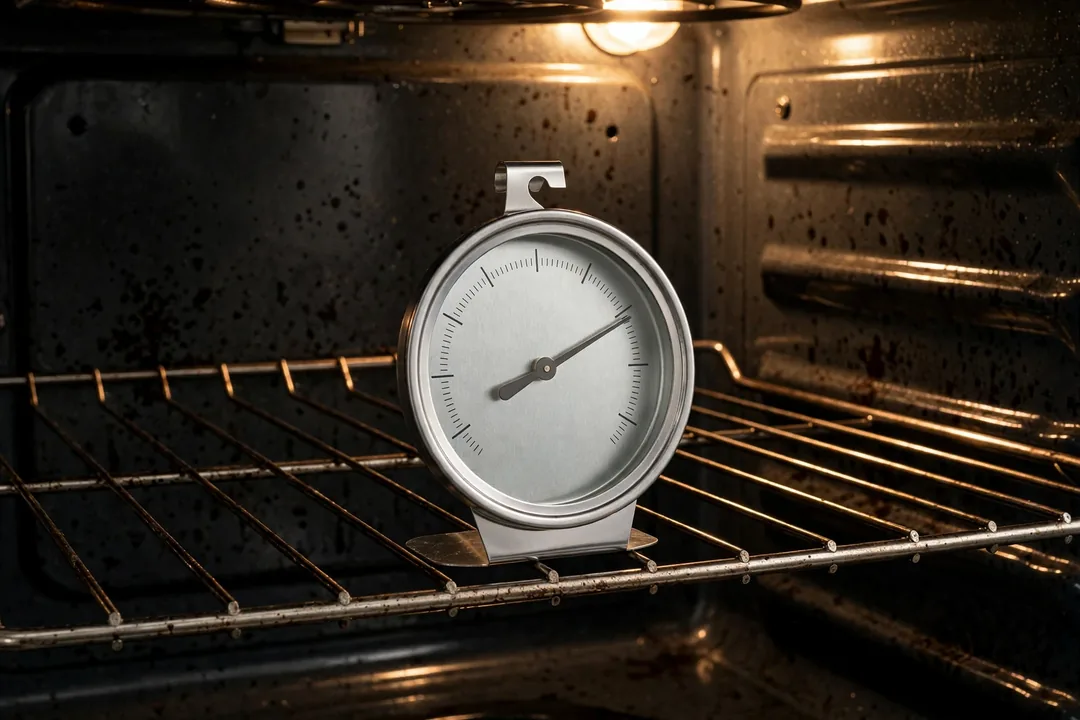
Do not adjust anything until you test. Buy an oven thermometer. They cost a few dollars at any grocery or hardware store. Do not trust the oven display. The display shows the set temperature, not the real one.
Hang the thermometer on the center rack. Set the oven to 350 degrees. Wait for the preheat signal. Then wait 20 more minutes. Ovens swing above and below the target as the element cycles. You need the average, not one reading.
Read the thermometer. Write down the number. Repeat the test once more to confirm. If both readings agree, you know your real oven temperature.
How Far Off Is Normal?
Ovens cycle. The element turns on, the temperature rises past the target. The element turns off, the temperature falls below it. This swing is normal.
A steady reading within 25 degrees of the set temperature is normal. Your oven is fine. Do not adjust it.
A steady reading 25 to 50 degrees off needs calibration. The oven works, but it reads wrong. A simple adjustment fixes it.
A steady reading more than 50 degrees off usually means a bad part. The temperature sensor, the bake element, or the control board is failing. Calibration cannot fix a dead sensor. Our oven not heating guide covers those failures.
Oven Temperature Calibration on Digital Models
Most digital ovens let you shift the temperature up or down. The range is usually plus or minus 35 degrees. Here is the general process.
Press and hold the Bake button for about 5 seconds. The display should show 0 or the current offset. Use the arrow keys or number pad to set the adjustment. If your oven runs 25 degrees hot, set minus 25. Press Start to save.
The exact buttons differ by brand. GE, Whirlpool, Frigidaire, and Samsung all use slightly different steps. Check your manual. It lists the calibration steps for your model.
After adjusting, test again with the thermometer. The reading should now match the set temperature within 25 degrees.
Calibration on Dial Models
Older ovens with a temperature knob adjust differently. Pull the knob straight off. Look at the back of the knob. You will see a small screw or two tiny screws.
Turn the screw slightly. The knob back usually has markings showing which way is hotter or colder. Make a small change. A quarter turn is plenty.
Push the knob back on. Test with the thermometer. Repeat until the temperature reads correctly. Small steps work best. It is easy to overshoot.
When Calibration Will Not Help
Calibration fixes a steady offset. It does not fix these problems.
The temperature swings wildly, 100 degrees up and down. That means a bad sensor or control board. The oven never reaches temperature at all. That means a dead element or igniter. Only the bottom burns while the top stays raw. That can mean a bad bake element or a broken convection fan.
If your oven has one of these problems, calibration is not the answer. Our oven repair hub walks through the common failures. For GE models, see our GE oven repair guide. For KitchenAid, see our KitchenAid oven repair guide.
Other Reasons Food Cooks Unevenly
Sometimes the temperature is fine but food still cooks badly. Check these first.
Rack position matters. The center rack gives the most even heat. Food on the bottom rack gets blasted by the bake element. Food on the top rack browns too fast under the broiler.
Dark pans absorb more heat. They brown bottoms faster. Shiny pans reflect heat and cook more gently. Match the pan to the recipe.
Do not open the door to peek. Each peek drops the temperature 25 to 50 degrees. The oven then overshoots while recovering. Use the oven light and window instead.
An overcrowded oven blocks airflow. Leave space around pans. Hot air needs room to move.
What to Do After Calibration
You calibrated. The thermometer reads correctly. But baking still disappoints. A few more checks can help.
Test at more than one temperature. An oven can read right at 350 but drift at 425. Test at the temperatures you use most. Some ovens need a compromise setting.
Check the convection fan if your oven has one. A dead fan leaves hot and cold spots. You will hear no fan noise during convection mode. Fan motors are common replacement parts.
Look at the door seal. A torn gasket leaks heat. The oven works harder and temperatures swing. Press around the gasket. It should feel springy all the way around. Replace it if it is flat or torn.
Give the oven a full preheat. Many people load food the moment the beep sounds. The walls are still catching up. Wait 10 extra minutes after the beep for the most even heat.
Keep Your Oven Temperature Honest
Test with a thermometer once a year. Sensors drift slowly. Catching drift early keeps your baking on track.
Clean up spills on the oven floor. Burned spills create hot spots. They also smoke and set off alarms.
If the temperature keeps drifting after calibration, replace the sensor. Sensors are cheap parts. A technician can test and replace one quickly.
Keep a simple log. Write the date and the thermometer reading each time you test. A log shows drift over time. It also helps a technician diagnose sensor problems faster. One line per test is enough. Note the rack position too, since heat varies by shelf. A thermometer on the top rack can read 15 degrees hotter than one on the bottom rack.
Baking still coming out wrong after calibration? Call us at +1 (888) 206-0056. Our oven repair team diagnoses temperature problems every day. Find a technician near you on our locations page.
Frequently Asked Questions
How do I know if my oven temperature is wrong?
Put an oven thermometer on the center rack. Preheat to 350 degrees. Wait 20 minutes after the preheat beep. Read the thermometer. If it reads more than 25 degrees above or below 350, your oven needs calibration or repair. Test twice to confirm before changing anything.
How far off can an oven be and still be normal?
Up to 25 degrees off is considered normal. Ovens cycle above and below the set temperature as the element turns on and off. That swing is normal. A steady reading more than 25 degrees off means the oven needs attention. More than 50 degrees off usually means a bad sensor or element.
Can I calibrate my oven myself?
Yes, most modern ovens let you adjust the temperature. Digital models have a calibration setting in the menu, usually plus or minus 35 degrees. Older dial ovens have an adjustment screw behind the knob. Your manual gives the exact steps. Always test with a thermometer first so you know how much to adjust.
Why does my oven burn food on the bottom?
The bottom element may be running too hot, or the oven temperature is set higher than it reads. Test with a thermometer first. Also check rack position. Food placed too low gets blasted by the bake element. Move the rack to the center. If the thermometer reads correctly, the problem is placement, not calibration.
Does oven calibration fix an oven that will not heat?
No. Calibration only fixes small temperature errors. If the oven does not heat at all, a part has failed. The element, igniter, or control board is the likely culprit. Calibration cannot fix a dead part. See our oven not heating guide for step-by-step checks on those failures.
How often should I calibrate my oven?
Test once a year. Sensors drift slowly over time. Recalibrate after any repair that touched the sensor or control board. You do not need to calibrate monthly. If the temperature keeps drifting after calibration, the sensor is failing and needs replacing.
Broken appliance? We're one call away.
Same-day appliance repair across 40 cities. Upfront pricing, written warranty, and an honest repair-or-replace answer on every job.
Call +1 (888) 206-0056