KitchenAid Oven Repair
KitchenAid oven repair: not heating, wrong temperatures, error codes, and self-clean lockouts. Fixes for electric and gas KitchenAid models.
Need appliance repair? Call now for same-day service.
Call +1 (888) 206-0056Need KitchenAid oven repair for a unit that will not heat, runs hot, or throws error codes? KitchenAid ovens share DNA with Whirlpool, since Whirlpool owns the brand. That is good news. Parts are common and techs know these machines well. This guide covers electric and gas KitchenAid models.
KitchenAid Oven Not Heating: Electric Models
Start with the bake element. Open the door and look at the bottom element. A healthy element looks smooth and even. A dead one shows blisters, cracks, or a visible break. The element can fail without any visible sign, so keep reading if it looks fine.
Check the broil element too. Switch to broil and watch. The top element should glow within a few minutes. If broil works but bake does not, the bake element or its relay is the fault.
The thermal fuse is next. KitchenAid electric ovens hide a thermal fuse on the back. It blows when the oven overheats, often after a self-clean cycle. A blown fuse kills all heat. It is a cheap part but check why it blew before replacing it.
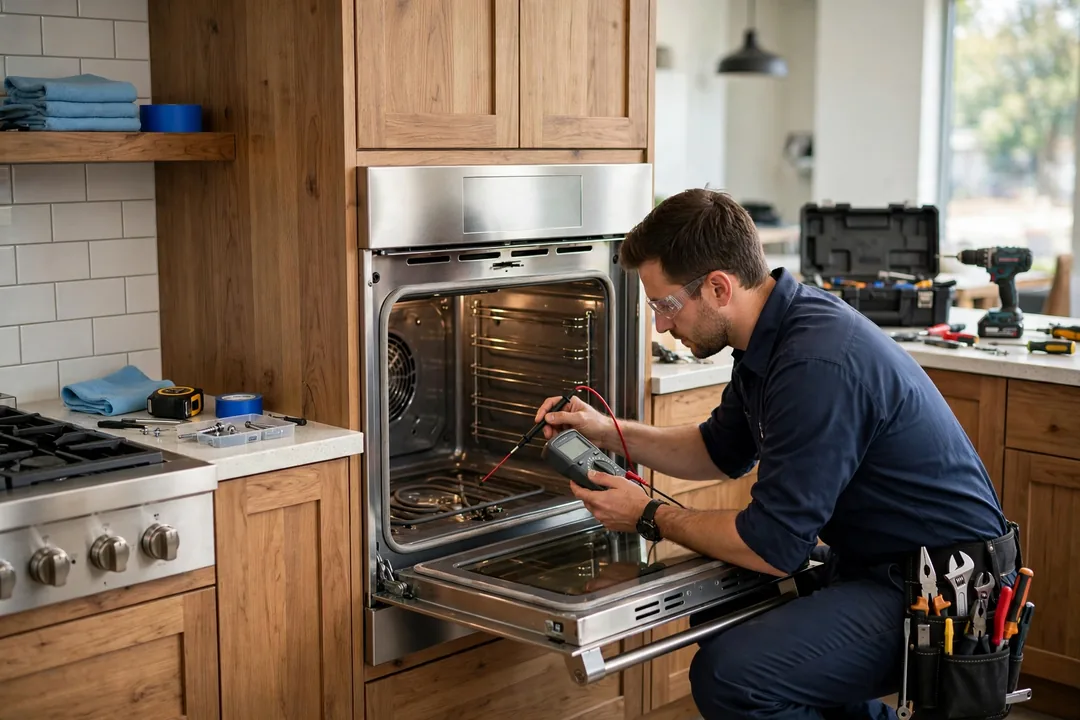
Our oven not heating guide walks through element testing with a multimeter. The steps apply directly to KitchenAid.
KitchenAid Gas Oven Problems
Gas models fail differently. The igniter is the heart of the system. A good igniter glows bright orange and opens the gas valve within a minute. A weak igniter glows dull red and never quite triggers the valve.
The classic symptom is slow preheat. The oven eventually heats but takes far too long. Owners often live with this for months. A new igniter fixes it in one visit.
If the igniter glows but the oven never lights, read our gas oven igniter guide. It covers the current draw test that proves a weak igniter.
Gas smell needs a different response. If you smell gas, do not troubleshoot. Leave the house. Call your gas company from outside. This rule has no exceptions.
Temperature Calibration
KitchenAid ovens let you calibrate the temperature. This matters because many “not heating right” complaints are really calibration drift. The oven heats, just to the wrong number.
Test first with an oven thermometer. Place it in the center. Set 350 degrees. Wait 20 minutes past the preheat beep. Note the reading. Repeat once to confirm.
If the oven runs consistently hot or cold by 15 degrees or more, calibrate it. Open the settings menu and find temperature offset or calibration. Most KitchenAid models allow adjustment up to 30 degrees either way. Move it in small steps and retest.
A failed temperature sensor causes wild swings instead of steady drift. The oven overshoots then undershoots. The sensor is a small probe inside the back wall. A tech can test its resistance in minutes.
KitchenAid Oven Error Codes
KitchenAid ovens show F codes when the control detects a fault. A power reset clears many transient codes. Flip the breaker off for a full minute. If the code stays away, it was a glitch.
F2E1 means a stuck key on the touch panel. Clean the panel and reset. If it returns, the keypad assembly needs replacement.
F6E0 or F6E1 point to lost communication between boards. Check for loose ribbon cables if you are comfortable opening the panel. Otherwise this is a tech visit.
Write down the exact code before resetting. The code is the most useful fact you can give the technician. It narrows the diagnosis before the visit starts.
Self-Clean Lockouts
Self-clean runs extremely hot. After the cycle, the door stays locked until the oven cools. Normal cooldown takes 60 to 90 minutes. Do not force the door.
A door stuck locked for hours signals a failed lock motor or sensor. Try the breaker reset. Some models release with a specific button hold sequence in the manual. If nothing works, the lock assembly needs service.
Frequent self-clean use wears ovens faster. The extreme heat stresses the control board and door lock. Many techs suggest running self-clean sparingly and wiping spills manually instead. Your oven will thank you.
KitchenAid Oven Repair: Parts Availability
One reason KitchenAid oven repair stays affordable is parts availability. Whirlpool owns KitchenAid. Most parts cross over to Whirlpool models. Igniters, elements, and sensors are stocked widely.
Buy parts by model number, not by looks. The model tag sits on the door frame or behind the storage drawer. Two ovens that look identical can use different boards. The model number removes all doubt.
OEM parts cost more than generic. For igniters and elements, OEM is worth it on KitchenAid. The fit is exact. The ratings match. Generic boards can cause new faults. Save the generic gamble for simple mechanical parts.
Keep the old part until the new one works. Compare them side by side before installing. If the connectors differ, stop. Return the part and recheck the model number. Forcing the wrong part causes damage.
When to Call a Professional
Call when the breaker reset does not clear a returning error code. Call when you smell gas. Call when the oven needs a control board, which is the most expensive common repair on these models.
Electric element swaps are fair DIY for handy owners. Gas valve work is not. Control board replacement sits in the middle. The part is plug and play on many models, but misdiagnosis is expensive.
KitchenAid wall ovens deserve a special note. The built in design makes access harder. Removing a wall oven takes two people and care with the electrical connection. Most owners should leave wall oven repairs to a tech from the start.
Convection models add a fan and a third element. If the fan never runs, food cooks unevenly even when temperatures read correctly. A dead convection fan motor is a common mid life failure. Listen for the fan during preheat. Silence means the motor or its relay has failed.
For brand comparison, our GE oven guide covers how the other big American brand fails. The patterns rhyme but the parts differ.
Ready for help? Call +1 (888) 206-0056. We repair KitchenAid ovens across 40 cities. See all areas we serve. Start with our oven repair hub for symptoms, costs, and booking.
Frequently Asked Questions
Why is my KitchenAid oven not heating?
On electric models, a burned out bake element is the top cause. Look for blisters or breaks in the element. On gas models, a weak igniter is the usual fault. The igniter may glow without getting hot enough to open the gas valve.
How do I calibrate my KitchenAid oven temperature?
Put an oven thermometer inside and run the oven at 350 degrees. Wait 20 minutes after preheat ends. If the reading is off by more than 15 degrees, adjust the calibration in the settings menu. Most KitchenAid models allow plus or minus 30 degrees.
What does F2E1 mean on a KitchenAid oven?
F2E1 points to a stuck or shorted key on the touch panel. Try a power reset first: flip the breaker off for one full minute. If the code returns, the keypad or control board needs replacement. Do not keep resetting a returning code.
Why is my KitchenAid oven locked after self-clean?
The oven stays locked until it cools below a safe temperature. This can take over an hour. If it stays locked for hours, the lock motor or temperature sensor has failed. Try a breaker reset. If the door stays shut, call a technician.
Can I replace a KitchenAid bake element myself?
Many owners can. Kill the breaker first, not just the oven switch. Remove the racks and the element mounting screws. Pull the element forward gently and disconnect the wires. Reverse the steps with the new element. If wires look burned, stop and call a pro.
Why does my KitchenAid gas oven take forever to preheat?
A weakening igniter is the most common cause. It still glows but draws too little current to open the gas valve promptly. Preheat stretches from minutes to half an hour. A new igniter restores normal preheat speed.
Broken appliance? We're one call away.
Same-day appliance repair across 40 cities. Upfront pricing, written warranty, and an honest repair-or-replace answer on every job.
Call +1 (888) 206-0056