refrigerator repair
Expert refrigerator repair for not cooling, dead ice makers, and leaks. Honest price ranges, quick checks to try first, and clear repair vs replace advice.
Need refrigerator repair? Call now for same-day service.
Call +1 (888) 206-0056A warm fridge is a race against spoiled food. This refrigerator repair guide covers the most common failures. You will find checks to try yourself, honest cost ranges, and when a new fridge makes more sense. We do repairs to fridges of every style: French door, side by side, top freezer, and bottom freezer.
Refrigerator repair: the most common problems, by symptom
A fridge rarely dies all at once. It sends signals first. Learning to read those signals saves money and a fridge full of groceries. Below are the failures behind most fridge repair calls, with the likely causes in order of cost.
Not cooling at all
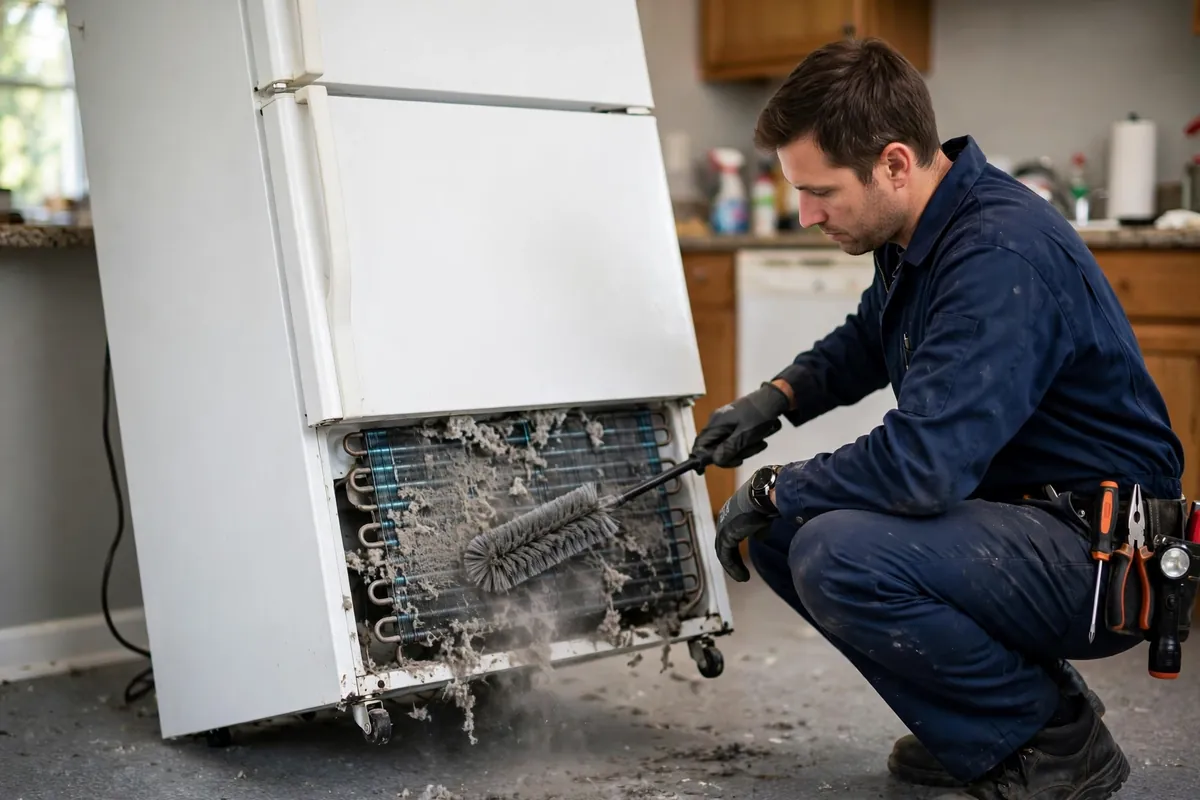
If both the fridge and freezer are warm, the cooling system has stopped. Start with the free fixes. Check the breaker and the outlet. Then listen. A click every few minutes often means a failed start relay. That is a small part on the side of the compressor. No sound at all can point to the compressor or the control board. Dusty condenser coils are the other big one. When coils cake over with dust and pet hair, heat cannot escape and the whole system strains. Clean them twice a year with a coil brush or a vacuum. Energy Star lists coil cleaning as basic upkeep that keeps the unit running well.
Freezer is cold but the fridge is warm
This is the most common fridge complaint of all. The good news: the compressor is usually fine. Cold air is made in the freezer and blown up to the fridge. When that path breaks, the freezer stays cold while the fridge warms. The usual suspects are a failed evaporator fan or a stuck damper. A defrost system failure can also ice the evaporator into a solid block. You can defrost the unit for 24 hours to buy time, but the ice comes back. A pro needs to find which part failed.
Ice maker stopped making ice
Dead ice makers top the list of small annoyances that turn into service calls. First check the freezer temperature. It must sit at 0 degrees for ice to form. Next, a frozen fill tube or a failed water inlet valve stops water from reaching the tray. Samsung French door models from about 2015 to 2022 are famous for this. Warm air leaks into the ice maker box, freezes, and forms an ice dam. If your ice maker keeps freezing up after resets, read our Samsung page first.
Water leaking on the floor
Puddles usually come from three places. The most common is a clogged defrost drain. Meltwater that should flow to the pan under the fridge backs up and spills out the front. You can often clear it yourself with warm water and a turkey baster. Next check the water line to the ice maker for cracks or loose fittings. Third, a cracked filter housing can leak after a filter change. Pull the fridge out and look before you call. A five minute look can save a service fee.
Loud or strange noises
Fridges hum. That is normal. Clicking, buzzing, or grinding is not. A loud buzz that stops and starts often means a failing start relay. Rhythmic clicking every few minutes can mean the compressor is trying to start and failing. Grinding or squealing usually comes from a fan motor with worn bearings. A fan blade hitting built up ice sounds similar. Rattling at the back can be as simple as a loose drain pan. A worn compressor mount rattles too. New noises after a move deserve a quick check of the leveling legs. An unlevel fridge vibrates.
Brand trouble spots that change the math
Some brands fail in ways so predictable that techs can guess the problem from the brand alone. Knowing yours helps you ask better questions and avoid paying for guesswork.
Samsung: ice makers on French door models
Samsung fridges cool well. Their sealed systems are solid. The weak point is the in door ice maker on French door models from roughly 2015 to 2022. Warm, humid air reaches the ice maker compartment, condenses, and builds an ice dam that jams the whole unit. Owners report repeated freeze ups even after service kits and software updates. If your Samsung ice maker has frozen up more than twice, get a tech who knows this specific failure. Our Samsung page has the full breakdown and the questions to ask before you book.
LG: linear compressor failures
LG fridges from about 2014 to 2017 have a known weak point: the linear compressor. Owners report units dying at five or six years old, far short of a normal fridge life. A class action settlement in 2020 covered 31 models with extended parts coverage. Watch the fine print on warranties. Many LG units carry 10 year parts coverage but only one year of labor. A covered compressor can still leave you with a large labor bill. If your LG fridge clicks and will not cool, read our LG page first.
Checks to try before you call
Do these in order. They cost nothing and fix a surprising share of broken fridges. If the problem is still there, you will have useful facts to give the tech.
- Check the outlet and breaker. Plug something else in to confirm power.
- Set the right temps: fridge 37 to 40 degrees, freezer 0.
- Clean the condenser coils. Dust and pet hair kill cooling.
- Clear the vents inside. Food packed against vents blocks airflow.
- Test the door seals. Close the door on a dollar bill. If it slides out easy, the seal leaks.
- Look at the back wall of the freezer. Thick frost or a sheet of ice points to a defrost failure.
Typical repair costs
Prices below are typical ranges charged by shops across the US. Your quote depends on the brand, the model, and your market. Nobody can price a repair without seeing the unit. Treat any phone quote as a guess until a tech diagnoses it.
- Diagnostic visit: $60 to $130, often credited toward the repair
- Ice maker replacement: $150 to $400
- Start relay: $120 to $250
- Evaporator or condenser fan: $150 to $300
- Defrost heater or thermostat: $150 to $350
- Water inlet valve: $150 to $300
- Control board: $250 to $600
- Compressor or sealed system: $700 to $1,250, with premium models reaching $2,500 or more
The sealed system is the big one. It needs special tools, a licensed tech, and often a part ordered from the manufacturer. That is why the price jumps.
Repair or replace: a simple way to decide
Use the 50 percent rule as a starting point. If the repair costs more than half the price of a comparable new fridge, replacement usually wins. Age sharpens the call. Under eight years old, most repairs are worth doing. Between eight and twelve, weigh the cost against the unit’s history. Over twelve years old, or facing a second major repair, buy new.
Two more factors matter. A sealed system failure on a fridge past year ten is almost never worth fixing. And new fridges use far less energy than models from a decade ago. Energy Star notes that replacing an old unit can cut its running cost, which tips close calls toward replacement.
What happens next
Write down the symptom, the brand, and the model number from the sticker inside the fridge. That is all a good tech needs to come prepared. Ask for the total flat rate before work starts, and ask to see the failed part after. To browse everything we cover, start at our home page. Looking for local help? Check our service areas.
Frequently asked questions
How much does it cost to replace a refrigerator compressor?
Most homeowners pay $700 to $1,250 for a compressor replacement. Premium and built in models can reach $2,500 or more. It is the most expensive fridge repair because it needs special tools and a licensed tech. Get the quote in writing. Ask how long the warranty on the sealed system work lasts.
Why is my freezer cold but the fridge warm?
Cold air is made in the freezer and blown up to the fridge section. When the freezer stays cold but the fridge warms, the problem is usually the evaporator fan, a stuck air damper, or a failed defrost system that has iced over the coils. The compressor is rarely the cause. A full defrost buys time, but the real fix is finding which part failed.
Why is my ice maker not making ice?
Check the freezer temperature first. It must hold 0 degrees. A frozen fill tube or a failed water inlet valve will stop water from reaching the tray. On Samsung French door models from 2015 to 2022, the ice maker box itself is a known weak point that freezes into a solid block. If resets do not last, the unit needs a tech who knows that specific failure.
What does a bad refrigerator compressor sound like?
Listen for clicking every few minutes as the compressor tries and fails to start. A loud hum that cuts out, or rattling from the back of the unit, are other warning signs. Sometimes a failing start relay sounds just like a failing compressor, so a tech should test the relay first. That is a far cheaper fix.
Is it worth repairing a refrigerator or should I replace it?
Use the 50 percent rule. If the repair costs more than half of a comparable new fridge, replace it. Under eight years old, most repairs are worth doing. Past twelve years, or with a sealed system failure on an older unit, replacement wins. Factor in energy savings too. New models cost far less to run.
How do I reset my refrigerator compressor?
Unplug the fridge for five minutes, then plug it back in. This clears some electronic faults and can restart a compressor that tripped on overload. It is a reset, not a repair. If the compressor trips again, something is wrong with the start relay, the compressor itself, or the sealed system. Call a tech instead of resetting it again.
Broken appliance? We're one call away.
Same-day appliance repair across 37 cities. Upfront pricing, written warranty, and an honest repair-or-replace answer on every job.
Call +1 (888) 206-0056