Why Is My Dryer Squeaking?
Why is my dryer squeaking? Worn rollers, a bad idler pulley, or a loose blower wheel are the usual causes. Learn how to find the noise and fix it.
Need appliance repair? Call now for same-day service.
Call +1 (888) 206-0056A squeaky dryer is hard to ignore. If you are asking why is my dryer squeaking, the good news is the cause is usually simple. Dryers have few moving parts. The noise almost always comes from one of four places. This guide shows how to find it by listening, what each sound means, and what the fix looks like.
Why Is My Dryer Squeaking?
A dryer squeaks when a moving part loses its smooth surface. The drum turns on rollers. A belt wraps the drum and spins it. A pulley keeps that belt tight. A blower wheel moves the hot air. When any of these wear down, metal rubs or plastic drags. That friction makes the squeak. The fix is to find the worn part and replace it.
Listen First: When Does It Squeak?
Timing is your best clue. A squeak that repeats with every drum turn points to the drum rollers. The drum is heavy. It rides on two or four small wheels. Each wheel turns as the drum turns. A worn wheel bearing squeaks once per rotation. You hear a steady rhythm.
A constant high-pitched squeal often means the idler pulley. This small pulley keeps the drive belt tight. It spins fast. When its bearing dries out, it screams. The sound may start the moment you press start and never pause.
A chirp or rattle that changes with airflow points to the blower wheel. This fan sits near the motor. It pushes hot air through the drum and out the vent. If it loosens on its shaft, it wobbles and chirps. Lint stuck in the housing can make it rattle too.
A scraping or grinding sound suggests the drum glides. These are small pads the front of the drum slides on. When they wear thin, the drum edge drags on metal. That makes an ugly scrape. It can also leave marks on clothes.
Drum Rollers: The Top Suspect
Drum rollers fail more than any other squeak part. They carry the full weight of wet laundry. Over years of heat and load, their bearings wear out. The fix is to replace them. Most techs replace all the rollers at once. They wear at the same rate. Replacing one while the others are old means a repeat visit soon.
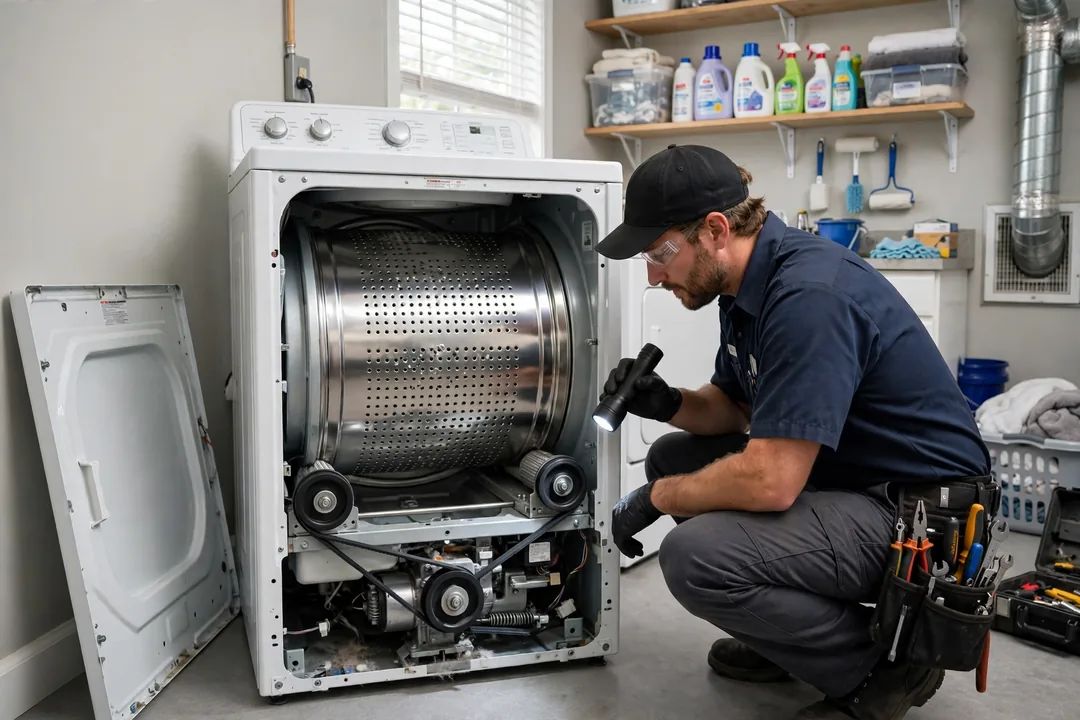
You can test rollers by hand. Unplug the dryer first. This is not optional. Take the front panel off to reach the drum. Spin each roller with your finger. A good roller spins smooth and quiet. A bad one feels gritty or wobbles. Replace any that feel rough.
Roller kits are made for each dryer model. The kit often includes the idler pulley too. Buying the kit saves a second repair later. If your dryer is over eight years old, ask the tech about a full wear-part refresh. A dryer repair visit covers it.
Idler Pulley: The Screamer
The idler pulley is small but loud. It presses against the drive belt to keep tension. It spins the whole time the motor runs. Its bearing is tiny. When it dries out, it squeals nonstop.
The pulley sits near the motor at the bottom of the dryer. On many models you can see it after removing the front panel. Spin it by hand. It should turn freely and silently. Any grinding or stiffness means it is done.
Pulleys are cheap parts. The labor is the main cost. The dryer is already open for the repair. It makes sense to check the belt and rollers at the same time. For more on belt trouble, see our dryer heating element replacement guide for how these parts come apart.
Blower Wheel: The Chirper
The blower wheel moves air through the dryer. It is a plastic fan on the motor shaft. Over time it can crack or loosen. A loose wheel wobbles and chirps. A cracked one rattles.
Lint is the other problem. Small items like socks can slip past the filter and jam the blower housing. That makes a flapping or thumping noise. Check the housing for trapped items before buying parts.
To inspect it, unplug the dryer and find the blower housing. It is usually at the front or back near the motor. Try to wiggle the wheel on its shaft. Any play means it needs replacing. Clean out all lint while you are in there.
Drum Glides and Belt: The Scrapers
Drum glides are felt or plastic pads. The front rim of the drum slides across them. When they wear through, metal meets metal. The result is a scraping sound. You may also see gray streaks on clothes.
The drive belt can squeak too. A glazed or cracked belt slips and chirps. If the belt looks shiny or has cracks, replace it. A broken belt stops the drum completely. The dryer will still run and heat, but nothing tumbles.
If your dryer heats poorly as well as squeaks, read our dryer not heating guide. Airflow and heat parts often fail together.
Dryer Making Loud Noise: Thumps and Bangs
Not every dryer noise is a squeak. Thumping usually means flat spots on the rollers. The drum drops slightly with each turn. The thump matches the drum speed. New rollers fix it.
A loud bang at startup can be the blower wheel or a loose drum baffle. Baffles are the fins inside the drum that lift clothes. If one breaks loose, clothes slam against it. Tighten or replace broken baffles.
Rattling often comes from the cabinet, not the drum. Check that the dryer sits level. A rocking dryer rattles against the floor. Loose screws on the back panel can buzz too. Our full how to fix a dryer guide covers these checks step by step.
Safety Before You Open Anything
Always unplug the dryer before removing panels. Electric dryers use 240 volts. That is enough to seriously hurt you. Gas dryers have a gas line plus 120 volts. If you smell gas at any point, stop. Leave the area and call your gas company.
Take photos as you take parts off. Dryer parts must go back in the same order. Keep screws in a cup so none get lost. If you are not comfortable working inside the machine, call a tech. Squeak repairs are quick for a pro.
When to Call a Technician
Call a tech if the noise persists after you check the obvious parts. Call sooner if the dryer also heats poorly, takes two cycles, or smells like burning. A burning smell means friction is creating real heat. Stop using the dryer until it is checked.
A pro can replace rollers, pulley, belt, and glides in one visit. They carry the common kits on the truck. The whole job often takes under an hour. Pick your city in areas we serve for local scheduling.
A squeaky dryer is telling you a part is worn out. Listen to when it squeaks. Match the sound to the part. Fix it before a cheap roller turns into a dead dryer. For broader dryer help, start with dryer repair and work from there. If the machine has you stumped, call +1 (888) 206-0056 and a tech will sort it out.
Frequently Asked Questions
Why is my dryer squeaking when it runs?
Worn drum rollers are the most common cause. The drum rides on small wheels. When their bearings wear out, they squeak with every turn. A bad idler pulley makes a similar noise. A loose blower wheel can chirp too. The timing of the noise tells you which part is failing.
Can I still use a squeaking dryer?
You can for a short time, but do not ignore it for long. A squeak means a moving part is wearing out. If a roller seizes or a belt snaps, the dryer stops working. Worse, extra friction can overheat parts. Fix the noise soon to avoid a bigger repair bill.
How much does it cost to fix a squeaking dryer?
Squeak repairs are usually among the cheapest dryer fixes. Rollers, pulleys, and belts are simple parts. Most of the cost is the service visit itself. Many techs replace all the wear parts in one visit, since they fail around the same age. Ask for a flat quote before work starts.
Why does my dryer make a loud thumping noise?
Thumping is different from squeaking. Flat spots on drum rollers cause a steady thump with each rotation. A heavy load of towels can also thump until it spreads out. If the thump never stops, check the rollers and the drum seal. Worn rollers are the top suspect.
Why does my dryer squeak only sometimes?
Heat changes the noise. Cold bearings squeak more at the start of a cycle. As parts warm up, the sound may fade. A light load can also squeak less than a heavy one. Intermittent squeaks still point to worn rollers or a pulley. The part is failing even if the noise comes and goes.
Is a squeaking dryer dangerous?
A squeak alone is not an emergency. But worn parts create extra friction and heat. A seized roller can burn a belt. In rare cases, lint near overheated parts is a fire risk. Keep the lint filter and vent clean. Book the repair soon rather than running the dryer for months like this.
Broken appliance? We're one call away.
Same-day appliance repair across 40 cities. Upfront pricing, written warranty, and an honest repair-or-replace answer on every job.
Call +1 (888) 206-0056