Dryer Vent Cleaning
Dryer vent cleaning prevents fires and fixes slow drying. Follow our step by step guide to clean the vent safely and know when a pro should take over.
Need appliance repair? Call now for same-day service.
Call +1 (888) 206-0056Clothes take two cycles to dry. The laundry room smells hot. Dryer vent cleaning fixes both problems and cuts your fire risk.
Most owners clean the lint filter and stop there. The filter catches only part of the lint. The rest coats the vent hose and the wall duct. That buildup chokes airflow and feeds fires. This guide shows how to clean the full vent path and when to call a pro.
Dryer Vent Cleaning: Why It Matters
A dryer works by pushing hot air through wet clothes and venting the moist air outside. Lint coats every inch of that vent path. Thick lint narrows the duct. Airflow drops. Drying slows. The heater works harder and runs hotter. Lint is excellent fuel sitting next to a heat source. The U.S. Fire Administration reports about 2,900 home clothes dryer fires each year. Lint buildup is a leading factor in those fires. Yearly vent cleaning is cheap insurance. It also cuts energy bills because dry cycles finish faster.
Why Does My Dryer Take So Long to Dry Clothes?
Long dry times and clogged vents share one cause. A partially blocked vent lets the dryer heat a little but never enough. Moist air cannot escape. Clothes tumble for two hours and still feel damp. Check three things. First, the vent path from filter to outside cap. Second, the load size. Wet clothes need room to tumble through hot air. Cut large loads in half and test again. Third, the washer. A washer that leaves clothes soaking wet doubles every dry time. If small loads dry fine but big ones do not, the vent is the bottleneck. Clean it end to end. If the dryer heats fine after cleaning but still struggles, our dryer not heating guide covers the deeper causes.
How to Clean Your Dryer Vent
Unplug the dryer first. On gas models, close the gas valve too. Pull the dryer away from the wall. You need room to work behind it.
What You Need
A vent brush kit with flexible rods handles most runs. A vacuum with a hose attachment clears loose lint. A screwdriver loosens the clamps. Keep a flashlight handy for the wall duct.
Step 1: Clean the Lint Filter and Chute
Pull the lint filter out. Wash it with dish soap and hot water. Dryer sheet residue coats the screen and blocks airflow. Let it dry fully. Vacuum the chute under the filter slot. Packed lint hides in this slot on every dryer.
Step 2: Disconnect the Vent Hose
Loosen the clamp where the hose meets the dryer. Pull the hose off gently. Do the same at the wall. Carry the hose outside. Shake it out and run the brush through it. If the hose is foil or plastic, replace it now. Only rigid metal duct is safe.
Step 3: Brush the Wall Duct
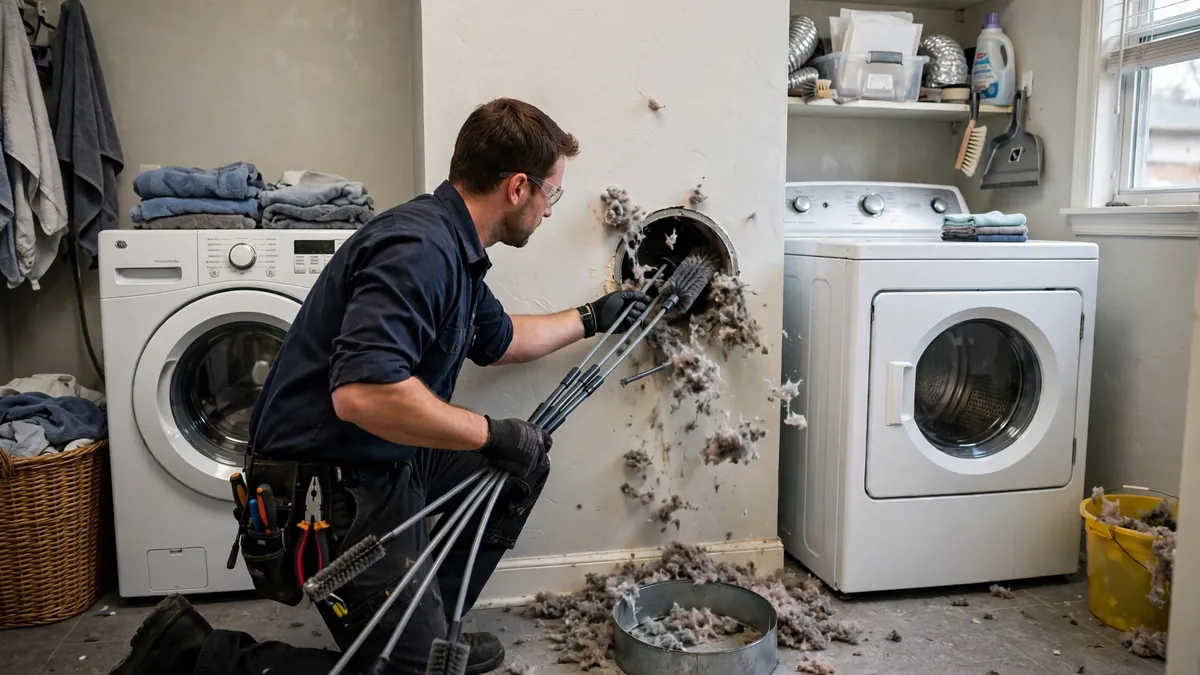
Push the brush into the wall duct. Twist as you feed rods in. Work from both ends if you can reach them. Pull the brush back slowly. Lint comes out in clumps. Keep going until the rods move freely and little lint remains.
Step 4: Vacuum Everything
Vacuum the wall duct opening. Vacuum behind and under the dryer. Lint drifts everywhere during this job. Vacuum the outside vent cap too. Clear any nest or debris from the cap flaps.
Step 5: Reconnect with Metal Clamps
Reconnect the hose with metal clamps, not tape. Tape dries out and fails. Keep the hose as short and straight as possible. Every bend traps lint. Push the dryer back, leaving the hose unkinked.
Step 6: Test the Airflow
Run the dryer empty on high heat for ten minutes. Go outside to the vent cap. You should feel strong hot airflow. Weak flow means a clog remains deeper in the run. Repeat the brushing or call a pro.
Clogged Dryer Vent Fire Warning Signs
Watch for these red flags between cleanings. A burning smell during the cycle tops the list. The dryer cabinet feels very hot to the touch. Clothes take much longer than they used to. The laundry room feels humid. You see lint collecting behind the dryer. The outside cap shows weak airflow while the dryer runs. Any one of these means clean the vent now, not next month. Two or more means stop using the dryer until it is cleaned.
Use the Right Vent Material
Rigid metal duct is the only safe vent material. Flexible foil hose crushes and traps lint in its ridges. Plastic vinyl hose can melt near the heater. Building code bans both. Many older homes still have them. Replace them with rigid metal. Keep the run short. Code allows 35 feet max. Subtract 5 feet for each 90 degree bend. Subtract 2.5 feet for each 45 degree bend. Shorter and straighter always wins. The outside cap needs a backdraft damper. It keeps cold air and pests out while letting moist air escape.
When to Hire a Pro
Some vents beat DIY tools. Roof vents need ladders and rotary equipment. Runs over 25 feet with multiple bends need pro brushes. Bird nests and heavy packed clogs need pro extraction. No airflow after your cleaning means the clog sits deep. Pros charge far less than a fire costs. A pro cleaning usually takes under an hour. Ask for before and after photos of the duct so you see what you paid for. Schedule the cleaning yearly and forget about it.
Slow Dryer? Start With the Vent
Vent clear and clothes still damp? The thermal fuse, element, or thermostat may be next. Book dryer repair and a tech will test the full heat circuit in one visit. Our dryer not heating guide covers the checks first. Call (+1 (888) 206-0056) for same day and next day slots. Vent checks come with every no heat visit. We serve Milwaukee, Sacramento, and Grand Rapids. See all areas we serve. Wondering what the fix might cost? Check our appliance repair cost guide.
Frequently asked questions
How often should I clean my dryer vent?
Clean it once a year. Clean it twice a year if you do heavy laundry, have pets, or use dryer sheets often. A vent that runs up through the roof needs pro cleaning on the same schedule.
Can a clogged dryer vent cause a fire?
Yes. Lint is extremely flammable. The U.S. Fire Administration reports about 2,900 home dryer fires each year. Lint buildup near the hot heater is the leading factor. Yearly cleaning is the main defense.
Why does my dryer take so long to dry clothes?
Poor airflow is the top cause. A clogged vent traps moist air inside the drum. Clothes tumble for hours and stay damp. Overloading the drum and a washer that leaves clothes too wet cause the same symptom.
Can I clean my dryer vent myself?
Yes for short straight runs. A brush kit and a vacuum handle most ground floor vents. Hire a pro for roof vents, runs over 25 feet, or vents with multiple bends. Pros carry rotary brushes that reach the full run.
What type of dryer vent hose is safest?
Rigid metal duct is the only safe choice. Flexible foil and plastic vinyl hoses trap lint, crush easily, and can melt. Building code bans them. Replace any foil or plastic hose with rigid metal.
Broken appliance? We're one call away.
Same-day appliance repair across 37 cities. Upfront pricing, written warranty, and an honest repair-or-replace answer on every job.
Call +1 (888) 206-0056