How to Fix a Dryer
Learn how to fix a dryer that won't start, heat, or spin. Start with the cheap checks, test parts in order, and know when to call a technician.
Need appliance repair? Call now for same-day service.
Call +1 (888) 206-0056A dead dryer throws off the whole household. Laundry piles up fast. This guide shows how to fix a dryer in the cheapest order, from free checks to part tests. You will learn what each symptom means and which parts cause it. You will also learn when to stop and call a professional.
How to Fix a Dryer That Won’t Start
Start with power. Check the breaker panel for a tripped double breaker. Electric dryers need 240 volts, and one tripped leg kills the heat or the whole machine. Push the door firmly and listen for the click of the door switch. A dryer will not run with the door switch open. If the switch feels loose or silent, it has likely failed.
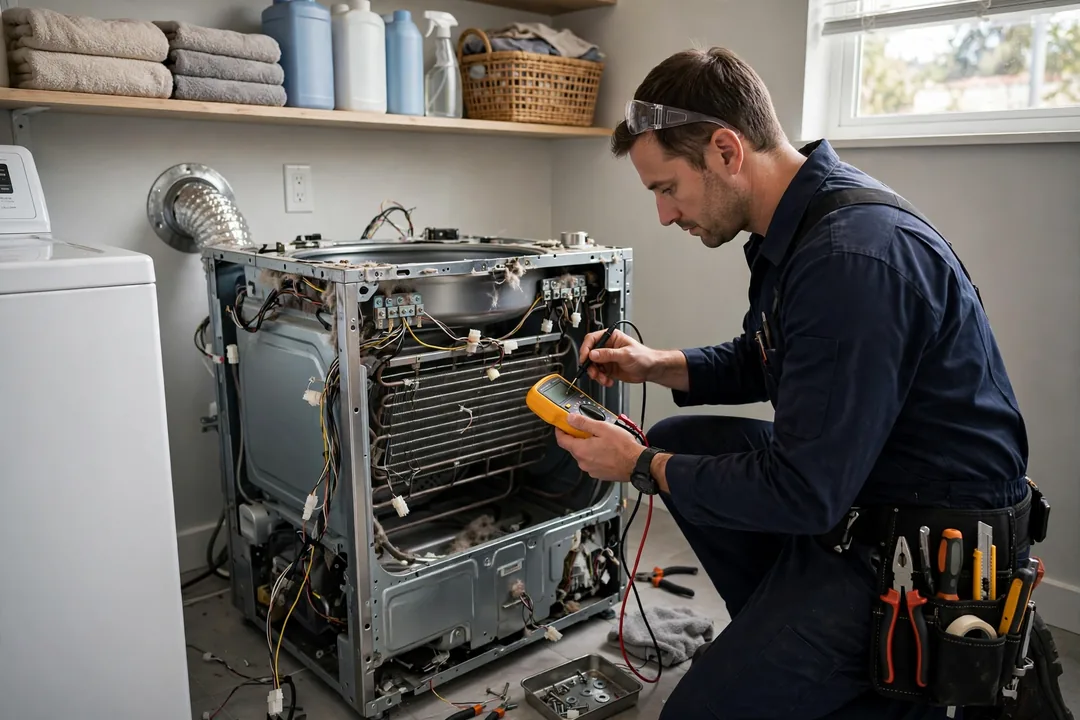
Next, check the thermal fuse. This small part blows when the dryer overheats, often from a clogged vent. A blown fuse cuts power to the motor circuit on many models. It never resets, so it must be replaced. Test it with a multimeter set to continuity. No beep means it is blown. Always clean the vent when you replace a fuse, or the new one will blow too. Our dryer vent cleaning guide walks through the full job.
If the fuse tests good, suspect the start switch or the door switch. Press the start button and listen. A mushy button with no click often means a dead switch. Door switches fail often because the door slams them thousands of times. Both parts are cheap and swap in with basic tools. Unplug the dryer before you touch any wiring.
Dryer Runs but Won’t Heat
A spinning drum with no heat points to the heating circuit. On electric models, the heating element is the prime suspect. On gas models, check the igniter and gas valve coils. Airflow trouble can also cause no heat, because a clogged vent trips the thermal fuse and kills the heater.
Work in this order: vent first, fuse second, heat source third. Clean the lint filter and the full vent path. Test the thermal fuse for continuity. Then test the heating element or watch the gas igniter. Our detailed walkthrough of why a dryer is not heating covers each step with photos of the parts. If the element coil is broken, our heating element replacement guide shows how the swap works.
Drum Won’t Spin or Tumble
Open the door and try to turn the drum by hand. If it spins freely with no resistance, the drive belt has snapped or slipped off. The belt wraps around the drum and the motor pulley. A broken belt is one of the cheapest dryer repairs. You will need to open the cabinet to loop the new belt on, which takes patience but no special skill.
If the drum is hard to turn or stuck, the drum support rollers or the idler pulley may have seized. Worn rollers also cause the thumping noise described below. A seized roller puts extra strain on the motor and can trip its thermal overload. Let a hot motor cool for 30 minutes, then try again. If the motor hums but never turns, it may be failing. Motor replacement costs more, so get a firm quote before you approve it. Book dryer repair and a tech can test the motor under load.
Dryer Is Noisy
Different noises point to different parts. A rhythmic thump with each drum rotation usually means flat-spotted drum rollers. A high-pitched squeal often comes from a worn idler pulley or a dry drum bearing. A scraping or grinding sound can mean something hard, like a coin or a bra wire, is trapped between the drum and the housing.
Unplug the dryer and check the drum seals and the lint trap housing for trapped objects first. That check is free. If the noise persists, the rollers or idler pulley are the likely wear parts. These parts are cheap, and replacing the full roller set at once makes sense since they wear together. A roaring sound like a jet engine points to the blower wheel. A cracked blower wheel throws the airflow off and needs replacement.
Clothes Still Damp After a Full Cycle
Damp clothes after a normal cycle almost always mean weak airflow or weak heat. Start with the lint filter. Hold it under running water. If water beads instead of flowing through, dryer sheet wax is blocking the mesh. Scrub it with dish soap and let it dry fully.
Next, check the vent hose behind the dryer. Flexible foil hose crushes flat against the wall and chokes airflow. Replace it with rigid metal duct if you can. Go outside while the dryer runs and feel the vent cap. Weak flow means a clog in the line. A vent brush kit clears most clogs. If airflow is strong and clothes still stay damp, the washer may be leaving them too wet. A washer that does not spin well doubles drying time.
When to Stop and Call a Technician
Stop and unplug the dryer if you smell burning or see scorch marks. Stop if the cabinet gets extremely hot to the touch. Those signs point to a failed thermostat or a lint fire risk. Never bypass a thermal fuse or thermostat to “test” the dryer. Those parts are safety devices. Running without them can start a fire.
Call a professional when the fault is in sealed wiring, the control board, or the motor. Live voltage tests are not safe for beginners. A gas smell means you leave the house and call the gas company first, not a repair tech. For everything else in this guide, a careful homeowner with a multimeter can handle the diagnosis.
Still Stuck After the Easy Checks?
Worked through the steps and the dryer still misbehaves? The fault may be a control board, a motor, or a wiring problem that needs live testing. Book dryer repair and a technician will run the full diagnostic in one visit. Call +1 (888) 206-0056 for same day and next day slots. We serve 40 cities nationwide. Pick your city in areas we serve to see local scheduling. Most dryer jobs finish in one visit because techs carry belts, fuses, rollers, and thermostats on the truck.
Frequently Asked Questions
How do you fix a dryer that won't start?
Check power first: the breaker, the outlet, and the door switch. A tripped breaker or a broken door switch stops everything. If power is fine, the thermal fuse or start switch is the next suspect. Most no-start faults trace back to one of these simple parts.
Why is my dryer tumbling but not drying?
Poor airflow is the usual cause. A clogged vent or coated lint filter traps moist air inside the drum. Clean the filter with soap and water, then check the vent hose for crushing or lint clogs. If airflow is strong and clothes still stay damp, the heating system needs testing.
What is the most common dryer problem?
No heat and long dry times top the list, and both usually come from blocked airflow. Lint buildup in the vent overheats the dryer and blows the thermal fuse. Regular vent cleaning prevents the majority of dryer service calls.
How much does it cost to fix a dryer?
Most dryer repairs typically land between $100 and $400, parts and labor included. Simple parts like fuses, belts, and thermostats sit at the low end. Control boards and motors cost more. A diagnostic visit usually runs $60 to $130, often credited toward the repair.
Is it worth fixing a 10-year-old dryer?
Often yes, if the fault is a cheap part like a belt, fuse, or thermostat. Dryers are simple machines and most parts are inexpensive. Consider replacement when the repair costs more than half the price of a comparable new dryer, or when multiple major parts fail at once.
Why is my dryer making a loud thumping noise?
A thumping sound that repeats with each drum turn usually means worn drum support rollers or a broken belt. Rollers flatten over time and thump as the drum rolls over the flat spot. Both parts are cheap. Stop using the dryer if the noise is severe, since a snapped belt can strain the motor.
Broken appliance? We're one call away.
Same-day appliance repair across 40 cities. Upfront pricing, written warranty, and an honest repair-or-replace answer on every job.
Call +1 (888) 206-0056