why is my freezer not freezing
Why is my freezer not freezing? Check temp settings, blocked vents, door seals, dirty coils, frost buildup, and fan or defrost failures with this guide.
Need appliance repair? Call now for same-day service.
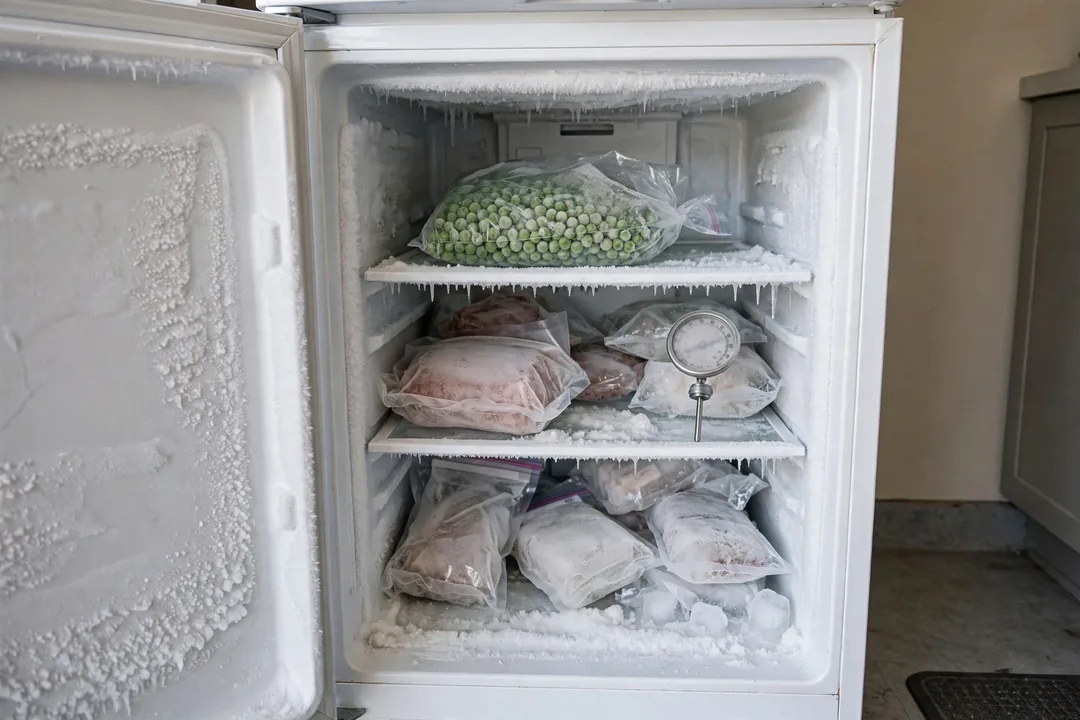
Call +1 (888) 206-0056When you ask why is my freezer not freezing, start with a thermometer. The freezer should hold 0 degrees Fahrenheit. Many freezers feel cold to the hand while running 15 or 20 degrees too warm. That gap is enough to soften ice cream and spoil meat. A two dollar thermometer tells you the truth in a few hours.
This guide walks through every common cause, from settings you can fix in seconds to parts that need a tech. Work through them in order. Most freezer failures are simple.
The fast answer to why is my freezer not freezing
Check the temperature setting first. Make sure vents are not blocked by food. Confirm the door seals tightly. Clean the condenser coils. Look for thick frost on the back wall. If all of those check out, the fault is likely a failed evaporator fan. It could also be a dead defrost part or a bad thermostat.
Step 1: Verify the real temperature
Place a freezer thermometer in the center of the freezer. Wait 4 to 6 hours without opening the door. Read it. Zero degrees is the target. Between 0 and 10 is borderline. Above 10 means the freezer is failing.
Do not trust the dial. Dial numbers like 1 through 9 do not map to exact temperatures. And a dial can get bumped by a bag of peas. Set it to the middle or one step colder, then verify with the thermometer.
Step 2: Check the temperature setting
The freezer control should sit at 0 degrees or the middle of its range. If someone set it warmer by accident, cooling suffers. This sounds too simple, but techs find bumped dials constantly. Set it correctly and give the freezer 24 hours to catch up. A freezer cannot recover in an hour.
Step 3: Clear the air vents
Cold air enters the freezer through vents, usually on the back wall. Food packed against these vents blocks circulation. Some areas freeze while others stay warm. Keep everything at least an inch from the back wall. This also fixes many cases of the fridge section freezing food. Blocked vents trap cold air in odd patterns.
Step 4: Test the door seal
A weak seal leaks cold air all day. Close the door on a dollar bill at several spots around the gasket. If the bill slides out easily, the seal is weak there. Look for cracks, tears, or flattened spots in the rubber. Clean sticky seals with warm soapy water first. A seal that will not grip needs replacing. This is one of the cheapest repairs in the book.
Step 5: Look at frost buildup
Open the freezer and study the back wall. A thin white frost film is normal. Thick ice, snow drifts, or frost covering the whole wall is not. Heavy frost blocks the vents and insulates the coils. It usually means the defrost system failed or moist air is leaking in.
If you see heavy frost, do a full manual defrost. Unplug the unit. Move food to coolers. Leave the doors open for 24 hours with towels on the floor. Plug back in and watch. If frost returns within weeks, a defrost heater, thermostat, or timer has failed. That is a pro repair.
Step 6: Clean the condenser coils
Dirty coils make the whole system struggle. Heat cannot escape, so the compressor runs longer and cools less. Pull the fridge out or pop the kick plate. Vacuum and brush the coils clean. Our full walkthrough on how to clean refrigerator coils covers this in detail. This single chore fixes more weak cooling than any other.
Step 7: Listen for the evaporator fan
The evaporator fan moves cold air through the freezer. Open the freezer door and press the door switch by hand. You should hear the fan humming. Silence means the fan motor is dead or iced up. No fan means no circulation, and food stays soft even though the coils are cold. Fan replacement is a routine pro job.
Step 8: Check the start relay and compressor
Listen near the bottom back of the fridge. A healthy compressor hums steadily. A clicking sound every few minutes points to a failed start relay. The relay is a cheap part and a quick fix. No sound at all, with warm temperatures everywhere, can mean compressor failure. That is the most expensive repair a fridge can need. Our compressor cost guide breaks down when it is worth doing.
Why is my freezer frosting over?
Frost is frozen moisture from warm air. Some frost is normal. Excess frost has a cause worth finding:
- Door left ajar or not closing fully.
- Worn or dirty door gasket letting in humid air.
- Hot or uncovered food placed inside.
- Defrost heater, thermostat, or timer failure.
- A freezer in a hot garage working overtime.
Fix the cause first. Then fully defrost to remove the buildup. Chipping ice off with a screwdriver can puncture the coils. Let it melt on its own.
When the fridge is fine but the freezer fails
If the fridge section cools normally while the freezer warms, the problem is usually airflow. It can also be a freezer specific part like its evaporator fan. The reverse case is a cold freezer with a warm fridge. Our freezer cold fridge warm guide covers that airflow problem.
Can you reset a freezer that is not freezing?
There is no magic reset button on most freezers. But a power cycle helps when the control board glitches. Unplug the unit for 5 minutes. Plug it back in. The board reboots and the compressor restarts. If cooling returns, the glitch is cleared. If the freezer warms again within days, a part is failing. Do not keep resetting it. Each warm spell risks your food.
Some models have a reset sequence in the manual. It usually involves holding two buttons. This only clears electronic errors. It cannot fix a dead fan, a bad seal, or low refrigerant. Think of it like restarting a phone. It fixes software hiccups, not broken hardware.
If you have worked through every check and the freezer still will not hold 0 degrees, stop guessing. Sealed system and electrical faults need proper testing. Our refrigerator repair techs carry the gauges and meters to pin down the fault in one visit.
Freezer still not freezing after these checks?
You have ruled out the easy causes. What is left needs tools and parts. Our techs diagnose freezer failures daily, from dead fans to failed defrost systems. Call +1 (888) 206-0056 to book. Home Appliance Repairs offers same day and next day refrigerator repair. We serve 40 cities across the US. Find yours on our locations page.
Frequently Asked Questions
What temperature should a freezer be?
A freezer should hold 0 degrees Fahrenheit, which is minus 18 Celsius. At that temperature food stays safe indefinitely and ice stays rock hard. Anything above 10 degrees means ice cream turns soft and food quality drops fast. Check with a thermometer, not the dial, because dial numbers do not always match the real temperature.
Why is my freezer cold but not freezing food solid?
The freezer is probably running a few degrees too warm. Common causes are blocked air vents, a door that does not seal, dirty condenser coils, or a temperature setting that is too high. Thick frost on the back wall can also block airflow. Each of these lets the freezer feel cold while food stays soft.
Can a freezer stop freezing if it is too full?
Yes. An overstuffed freezer blocks the vents that move cold air around. Cold air cannot circulate, so some spots stay too warm. Keep food an inch away from the back wall vents. A freezer that is too empty can also struggle, since frozen food helps hold the cold when the door opens.
How do I know if my freezer's defrost system failed?
Thick frost or ice coating the back wall of the freezer is the giveaway. In a healthy freezer the back wall has only a thin frost film. A failed defrost heater, timer, or sensor lets ice build until it blocks airflow. A full 24 hour manual defrost restores cooling temporarily, but the failed part must be replaced.
Why is my freezer frosting over?
Frost builds when warm moist air keeps getting inside. The usual causes are a door left ajar, a worn door seal, frequent long door openings, or hot food placed inside uncovered. A failed defrost system causes frost even with good seals. Fix the air leak or the defrost part, then fully defrost to remove the buildup.
Is it worth repairing a freezer that will not freeze?
Most causes are cheap fixes like a door seal, a thermostat, or a defrost part. Those repairs usually make sense on a freezer under 12 years old. A failed compressor is the expensive exception. If the compressor is gone on an old unit, replacement usually beats repair.
Broken appliance? We're one call away.
Same-day appliance repair across 40 cities. Upfront pricing, written warranty, and an honest repair-or-replace answer on every job.
Call +1 (888) 206-0056