do refrigerators use freon
Do refrigerators use Freon? Old fridges used R-12 Freon. Modern fridges use R-134a or R-600a. Learn why you cannot DIY a recharge and when to call a pro.
Need appliance repair? Call now for same-day service.
Call +1 (888) 206-0056Do refrigerators use Freon? If yours was built in the last 25 years, the answer is no. Freon is the brand name for R-12, a refrigerant phased out in the 1990s. Modern fridges run on R-134a or R-600a instead. The name Freon stuck around in everyday speech, the way people say “Xerox” for any copy. But the chemical inside your fridge is almost certainly something else.
This guide explains what your fridge actually uses, why it matters, and what to do if the refrigerant runs low.
The short answer on do refrigerators use freon
No, not anymore. Fridges made before the mid 1990s used R-12 Freon. That chemical was banned for damaging the ozone layer. Modern fridges use R-134a or R-600a. Both cool just as well with far less environmental harm. Only an antique fridge still runs on real Freon.
A quick history of fridge refrigerants
Refrigerant is the chemical that carries heat out of your fridge. It loops through the sealed system, absorbing heat inside and releasing it through the condenser coils. The chemical has changed over the decades:
- Before 1995: R-12, sold as Freon. Great coolant, terrible for the ozone layer. Banned under the Montreal Protocol.
- 1995 to about 2015: R-134a. No ozone damage. Still used in millions of fridges today.
- 2015 to now: R-600a, or isobutane. Very low climate impact. Now standard in most new fridges.
Each change kept cooling performance the same while cutting environmental harm. Your fridge manual lists the exact type on the model plate inside.
Why the type matters to you
Three practical reasons:
- You cannot mix them. Each system is built for one refrigerant. The wrong type can damage the compressor.
- R-600a is flammable. It is safe inside the sealed system, but a tech must handle it with care. This is another reason refrigerant work is never DIY.
- Old Freon fridges need special handling. R-12 must be recovered by a licensed tech, never vented. If you junk an antique fridge, the refrigerant must be captured first.
Signs your fridge is low on refrigerant
Low refrigerant means there is a leak. The sealed system is closed, so it never “uses up” refrigerant. Watch for these signs:
- The fridge runs constantly but food stays too warm.
- The compressor feels extremely hot to the touch.
- The evaporator coils frost only partway, not evenly.
- You hear a faint hissing from the back of the fridge.
- Cooling got worse gradually over weeks or months.
These symptoms overlap with dirty coils and failed fans. Clean your refrigerator coils first. If cooling does not improve, a tech needs to test the sealed system with gauges. Our freezer not freezing guide walks through the other causes to rule out.
Why you cannot recharge it yourself
This is the question every homeowner asks. The answer has three parts:
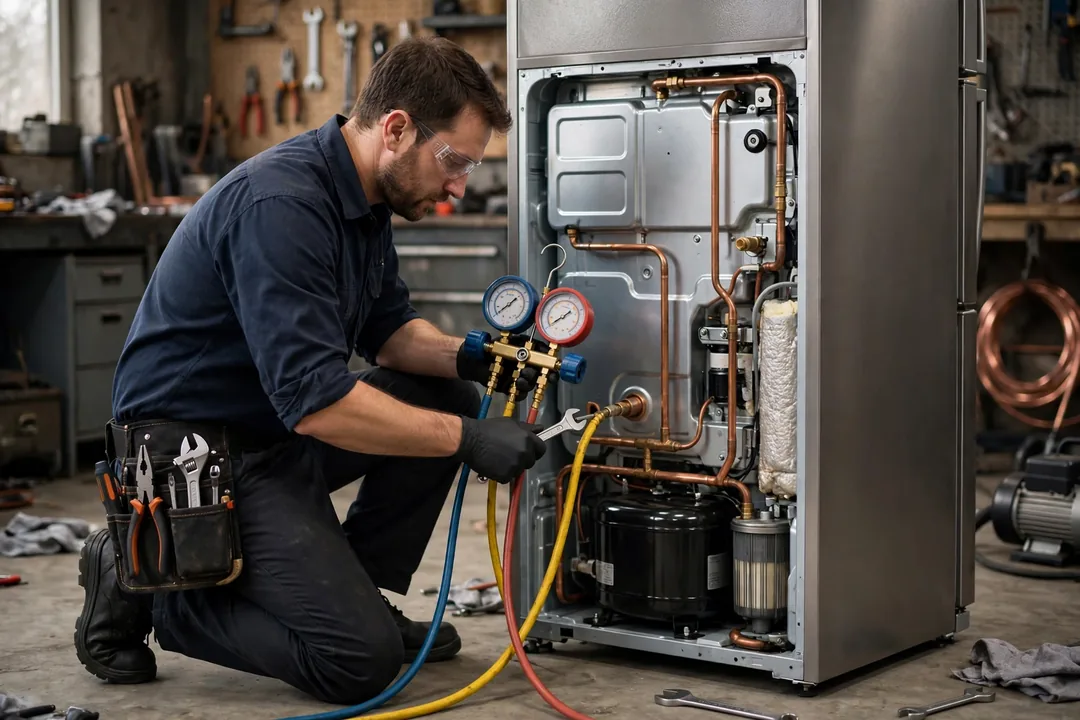
The system is sealed. Factory built fridges have no service ports. A tech must braze on access valves just to connect gauges. That takes torches and training.
The law requires a license. Federal rules say only certified technicians may handle refrigerants. This applies to R-134a, R-600a, and old R-12 alike. Fines for venting refrigerant are steep.
A recharge without a leak repair is pointless. Refrigerant does not get consumed. If the level is low, there is a hole somewhere. Pumping in more without fixing the leak means it leaks out again. A proper repair finds the leak with electronic detectors or dye. The tech seals it, pulls a vacuum, then weighs in the exact refrigerant charge.
What a sealed system repair involves
When a tech confirms low refrigerant, the job goes like this:
- Leak detection with electronic sniffers or UV dye.
- Leak repair, often by brazing the damaged tube.
- Installing service ports on the sealed lines.
- Pulling a deep vacuum to remove air and moisture.
- Weighing in the exact refrigerant charge.
- Testing cooling performance over several hours.
This is skilled work with expensive tools. It is also why sealed system repairs cost more than any other fridge fix. Our compressor replacement cost guide covers pricing for the biggest sealed system jobs.
Environmental rules in plain words
You do not need to memorize the regulations. Just know the basics:
- Refrigerant must never be vented into the air on purpose.
- Only licensed techs may recover or recharge it.
- Old fridges must have refrigerant removed before disposal or recycling.
- Your city or utility may offer free pickup that handles this properly.
When you replace an old fridge, ask the hauler if they recover refrigerant. Legitimate recyclers do this as standard practice.
Where to find your fridge’s refrigerant type
Open the fridge door and look for the model plate. It sits on the inside wall or behind the crisper drawer. The plate lists the refrigerant type next to the model and serial numbers. You will see R-134a, R-600a, or on very old units, R-12. The charge weight is listed too, usually in ounces.
Knowing the type helps you have a smarter talk with the tech. It also matters when buying a used fridge. An R-12 unit is decades old and near the end of its life. Factor that into the price. If the plate is missing or unreadable, the tech can identify the system during a refrigerator repair visit.
Is a low refrigerant fridge worth fixing?
Use the 50 percent rule. If the sealed system repair costs more than half the price of a comparable new fridge, replacement usually wins. On a fridge under 10 years old, a leak repair and recharge often makes sense. On a 15 year old unit with a failing compressor, put the money toward a new fridge. Our repair or replace guide walks through the full math.
Suspect a refrigerant problem?
Do not guess with the sealed system. Our techs carry leak detectors and gauges on every truck. We confirm the diagnosis before quoting any sealed system work. Call +1 (888) 206-0056 to book. Home Appliance Repairs offers same day and next day refrigerator repair. We serve 40 cities across the US. Find yours on our locations page.
Frequently Asked Questions
Do modern refrigerators still use Freon?
No. Freon is the brand name for R-12 refrigerant, which was phased out in the 1990s because it damages the ozone layer. Fridges built since then use R-134a or R-600a instead. If your fridge was made in the last 25 years, it does not contain Freon. Only very old units still run on R-12.
What refrigerant do new refrigerators use?
Most fridges from the last 20 years use R-134a. The newest models use R-600a, also called isobutane, which has a much lower impact on the climate. Both work the same way from your point of view. The type matters mainly to the technician, who must use the exact refrigerant the system was designed for.
Can I add Freon to my refrigerator myself?
No. Refrigerant work is not a DIY job for three reasons. The sealed system has no service ports for homeowners. Federal law requires a license to handle refrigerants. And low refrigerant always means there is a leak, so adding more without fixing the leak wastes money. A licensed tech must find the leak, repair it, and recharge the system.
How do I know if my fridge is low on refrigerant?
The fridge runs constantly but never gets cold enough. The compressor feels very hot. You may hear hissing from the back. The evaporator coils frost only partway instead of evenly. Dirty coils and bad fans cause similar symptoms, so a tech should confirm with gauges before condemning the sealed system.
Is leaking Freon from a fridge dangerous?
Refrigerant leaks are not an emergency in a ventilated kitchen, but they deserve prompt attention. Old R-12 harms the ozone layer, which is why it was banned. Newer R-600a is flammable in high concentrations. If you hear hissing or smell chemicals near the fridge, ventilate the room and call a technician.
How much does a refrigerator refrigerant recharge cost?
Sealed system work is the most expensive fridge repair because it needs a licensed tech, leak detection, and special equipment. Costs vary widely by leak location and refrigerant type. Get a firm quote before approving the work. On fridges over 12 years old, compare the repair cost against replacement using the 50 percent rule.
Broken appliance? We're one call away.
Same-day appliance repair across 40 cities. Upfront pricing, written warranty, and an honest repair-or-replace answer on every job.
Call +1 (888) 206-0056