Washing Machine Drain Clogged
Washing machine drain clogged? Learn how to tell a hose clog from a plumbing backup, clean the pump filter, and clear the standpipe step by step.
Need appliance repair? Call now for same-day service.
Call +1 (888) 206-0056Water on the laundry floor is never a good surprise. A washing machine drain clogged with lint, coins, or gunk is one of the most common causes. The fix is often free and takes less than an hour. This guide covers the drain system: the pump filter, the drain hose, the standpipe, and your house plumbing. If the problem sits inside the washer itself, our washer won’t drain or spin guide can help. It covers pumps, lid switches, and belts.
Washing Machine Drain Clogged: Warning Signs
A washing machine drain clogged with debris shows clear signs. Water backs up and spills out of the standpipe during the drain cycle. The cycle runs long because the machine keeps trying to empty. Clothes come out dripping wet. You may hear the pump straining or gurgling. A sour smell can build up from standing water in the hose. If the tub stays full and the standpipe stays dry, the block is inside the washer, not the drain. Clean the filter first either way.
Is It the Washer or the Plumbing?
This is the question that decides who you call. Run a drain cycle and watch. Water rising out of the standpipe means the clog is in the standpipe or the house drain. A plumber owns that fix. Water sitting in the tub with a dry standpipe means the clog is in the washer. The filter, hose, or pump is blocked. An appliance tech owns that fix. Both are cheap compared to a new machine. Do the free checks below before you call anyone.
Step 1: Clean the Drain Pump Filter
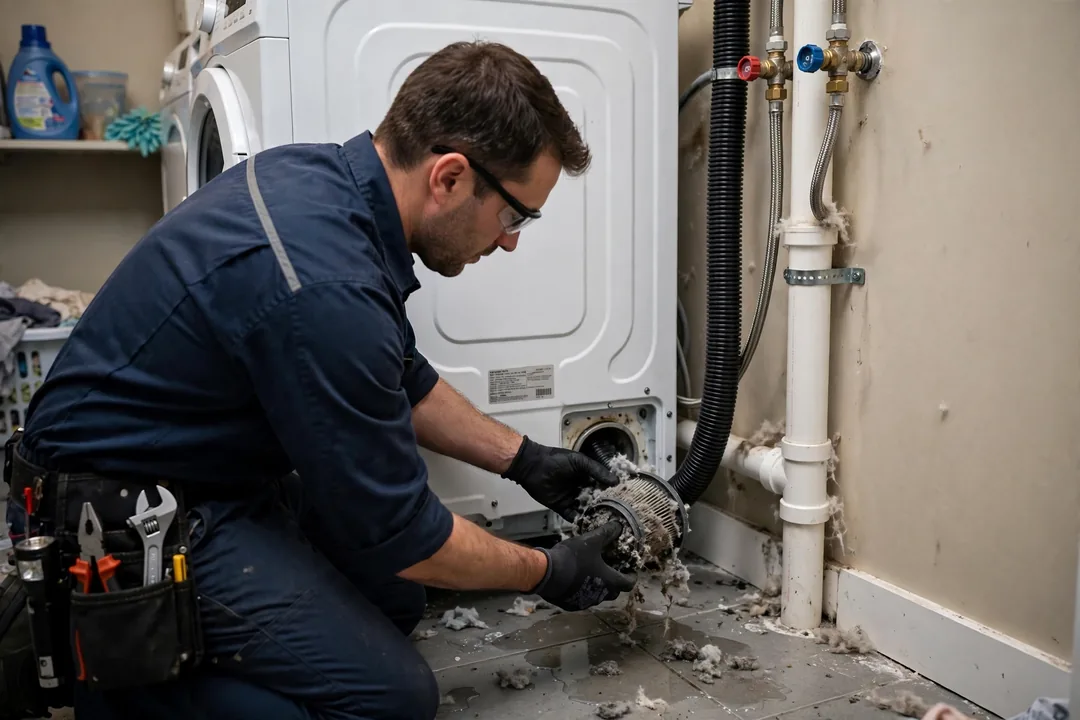
The pump filter catches coins, hair ties, lint, and socks before they reach the pump. On most front load washers it sits behind a small access panel at the bottom front. Lay towels down and keep a shallow pan handy. Twist the cap slowly counter clockwise. Water will flow out, so go slow. Pull the basket out and rinse it clean. Reach into the housing and feel for stuck items. Screw the cap back on tight. A loose cap leaks on the next cycle. Top load washers usually skip this filter. If yours has none, move to the hose. A moldy filter can also feed odors, so see our front load washer mold odor guide if the machine smells.
Step 2: Check the Drain Hose for Kinks and Clogs
Pull the washer out gently so you can see the hose. Straighten any kinks or sharp bends. A hose pinched behind the machine drains slowly or not at all. The hose should enter the standpipe only four to six inches. Deeper than that, and water can siphon out during the fill. Pull the hose out of the standpipe and look inside both ends. Lint and small socks love to lodge at the bends. Run water through the hose to confirm it flows freely. Replace the hose if it is cracked or crushed flat.
Step 3: Clear the Standpipe
The standpipe is the vertical pipe the hose drains into. It can clog with lint, soap scum, and debris. A short drain snake, about six feet, reaches most standpipe clogs. Feed it down slowly and twist as you go. Pull it back out and run a drain cycle to test. If water still backs up, the clog sits deeper in the house drain. Do not use chemical drain cleaner in the standpipe while the washer hose is connected. It can splash back and damage the machine. A plumber with a longer snake clears deep clogs fast.
Step 4: Watch for House Plumbing Backup
Some clogs are not the washer’s fault at all. If other drains in the house are slow, the main line is the problem. Gurgling from a nearby sink during the drain cycle is another sign. Water backing up in a floor drain or shower points to the main line too. These need a plumber, not a washer tech. A washer pumps a lot of water fast. A partly blocked main line handles sinks fine but chokes on a washer load. This is normal and common in older homes.
When to Call for Help
Call a plumber if water backs up out of the standpipe after you snaked it. Call a plumber if several drains in the house run slow. Call a washer repair tech if water stays in the tub and the standpipe is dry. Call a tech if the pump makes no sound at all during the drain cycle. That can mean a dead pump or no power to it. Either way, stop running the machine until it is fixed. Repeated failed drains can burn out the pump.
Soap Residue Feeds Drain Clogs
Too much detergent does more than waste money. Extra soap leaves a sticky film inside the hose and standpipe. Lint sticks to that film. Over months, the layer grows until water cannot pass. This is the slow clog. The drain works fine for a year, then backs up one day with no warning.
Use the amount on the detergent label, not the cap lines. The cap lines often suggest more than you need. High efficiency washers need HE detergent only. Regular detergent makes too many suds. Suds leave extra residue in the drain system. If you have soft water, use even less. Soft water makes soap work harder, so a little goes a long way. Cutting back on soap is the cheapest clog prevention there is.
Keep the Drain Clear
Clean the pump filter every two to three months. Use the right amount of detergent. Too much soap leaves residue that feeds clogs and odors. Check the hose position once a year. Machines creep forward over time and kink the hose. Leave the washer door open between loads on front load models. Airflow stops mold from growing in the filter housing. Small habits beat big repair bills.
Still stuck with standing water? Call +1 (888) 206-0056 and tell us what you see during the drain cycle. We will tell you whether it sounds like a washer job or a plumbing job before anyone rolls a truck. See washer repair for service details, or pick your city in areas we serve.
Frequently Asked Questions
How do I know if my washing machine drain is clogged?
Watch the drain cycle. If water backs up out of the standpipe, the hose or house drain is blocked. If water stays in the tub and nothing reaches the standpipe, the block is inside the washer, usually the pump filter or hose. Our washer won't drain guide covers the internal side.
Where is the drain pump filter on a washing machine?
Front load washers hide it behind a small panel at the bottom front corner. Open it over towels, twist the cap slowly, and pull the basket out. Top load washers rarely have an owner filter. Clean the basket every few months to stop clogs before they start.
Can I use Drano in my washing machine drain?
Do not pour chemical drain cleaner into the washer or its hose. It can damage rubber seals and the pump. For the standpipe, a drain snake is safer and works better. If the house drain keeps backing up, that is a plumber's job, not a washer problem.
Why does water come up out of the standpipe during the drain cycle?
The standpipe or the house drain behind it is partly blocked. The washer pumps water faster than the drain can take it, so it overflows. A short snake run down the standpipe clears most of these. If it keeps happening, the main drain line may need a plumber.
Is a clogged washer drain a plumber job or an appliance tech job?
It depends where the clog sits. Water stuck in the tub means a washer tech. Water backing up out of the standpipe means a plumber. If you are not sure, check the pump filter and hose first. Those are free fixes either way.
How far should the drain hose go into the standpipe?
Four to six inches. Pushing it deeper can cause siphoning, where water drains out as fast as it fills. It can also let the hose tip sit in backed up water. Keep it shallow and secure it so it cannot slip out during the spin.
Broken appliance? We're one call away.
Same-day appliance repair across 40 cities. Upfront pricing, written warranty, and an honest repair-or-replace answer on every job.
Call +1 (888) 206-0056