Why Won't My Washing Machine Drain?
Why won't my washing machine drain? Learn how to fix washing machine not draining trouble: clean the pump filter, check the hose, test the lid switch.
Need appliance repair? Call now for same-day service.
Call +1 (888) 206-0056The cycle ends and your clothes sit in a tub of gray water. Wondering why won’t my washing machine drain? You are not alone. Consumer Reports lists failure to drain in about five percent of washer complaints. The good news is that most causes are simple. This guide walks you through how to fix washing machine not draining trouble step by step. It also covers the twin problem of a washer that drains but will not spin.
Why Won’t My Washing Machine Drain?
A washer drains by pumping water through a filter, then out a hose to your standpipe. The most common block is a clogged drain pump filter, also called the coin trap. A kinked or clogged drain hose comes next. An unbalanced load can stop the cycle before the drain step runs. A failed drain pump, a broken lid switch, or a bad door lock rounds out the list. Start with the filter. It solves the problem more often than anything else.
Safety First: Water and Power
Unplug the washer before you open any panel. Water and electricity are a dangerous pair. Lay towels around the machine before you touch the filter. The tub can hold several gallons. Have a shallow pan ready to catch the flow. If water already spilled onto the floor, mop it up before you plug anything back in.
How to Fix Washing Machine Not Draining
Work the steps in order. Each one takes a few minutes. Stop when the machine drains again.
Step 1: Clean the Drain Pump Filter
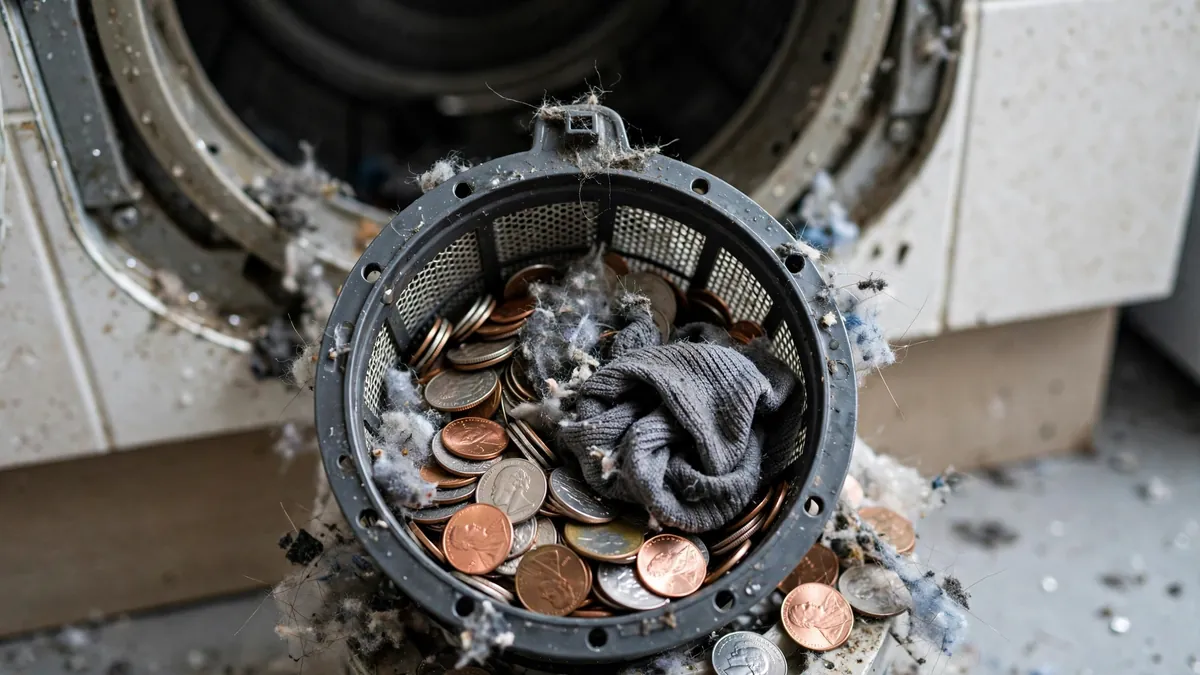
Find the small access panel at the bottom front of the machine. Front load washers hide the filter behind it. Place towels and a shallow pan under the opening. Turn the filter cap slowly counter clockwise. Water will start to flow, so go slow. Pull the filter basket all the way out. You will often find coins, hair ties, lint, and even socks. Rinse the basket clean under the tap. Reach into the housing and feel for anything stuck. Screw the cap back on firmly. A loose cap will leak during the next cycle.
Step 2: Check the Drain Hose
Follow the hose from the back of the washer to the wall standpipe. Pull the machine out gently if you need room. Straighten any kinks or sharp bends. The hose should push only four to six inches into the standpipe. Pushing it too deep can cause siphoning problems and slow drains. Pull the hose out of the standpipe and look inside for clogs. Lint and small socks love to lodge there. Blow through the hose or run water through it to confirm it is clear.
Step 3: Rebalance and Run a Drain Cycle
A single heavy item can unbalance the tub. A wet blanket or a pair of jeans can trigger the balance sensor. The machine then stops before the drain and spin. Open the lid and spread the load evenly around the tub. Add a few towels if the load is very small. Close the lid and select a drain and spin cycle. Many washers drain fine once the load sits balanced.
Step 4: Test the Lid Switch or Door Lock
Top load washers will not spin with the lid open. The lid switch tells the machine the lid is shut. Press the switch down with a pen while the lid is open. If the machine starts draining or spinning, the switch is worn or misaligned. Front load washers use a door lock instead. If the door lock light never comes on, the lock may have failed. Listen for a click when you start the cycle. No click often means no lock, and no lock means no drain and spin.
Step 5: Listen to the Drain Pump
Start a drain cycle and put your ear near the machine. A working pump makes a steady hum. A loud rattle points to something jammed in the pump. Total silence suggests the pump gets no power or has burned out. On classic Whirlpool, Maytag, and Kenmore direct drive models, the drain pump is simple. Owners can see it from underneath with the machine tilted back. A failed pump on these machines is one of the cheapest washer repairs there is. If the pump is dead on a newer electronic model, get a technician to confirm it. A meter test beats buying parts on a guess.
What If It Drains but Will Not Spin?
A washer that empties yet refuses to spin has a different short list. The lid switch or door lock is still suspect number one. Balance problems are suspect number two. A worn drive belt can slip under load on older belt drive machines. You may hear the motor run while the tub barely turns. A failed shift actuator on newer top load models can trap the machine between agitate and spin. Try the rebalance step first. Then test the lid switch. Belt and actuator jobs are quick work for a technician. See typical prices in our appliance repair cost guide.
Front Load vs Top Load Differences
Front load washers almost always have an owner accessible pump filter. Clean it every three to six months. Their door locks fail more often than lid switches do. Top load washers rarely have a filter you can clean. Their drain path runs straight from pump to hose, so check the hose first. Older top load machines use belts and lid switches that wear out with age. Newer models use electronic actuators and locks. The diagnostic steps above work for both styles. The part names just change.
When to Call a Technician
Call when the pump hums but moves no water after the filter and hose are clear. Call when the control board shows an error code you cannot clear with a reset. Call when you smell burning or see scorch marks near the motor. Unplug the machine and do not run it again in that case. The Consumer Product Safety Commission tracks appliance electrical faults as a real fire risk. A pro will test the pump, the board, and the wiring in one visit. If your dishwasher has similar standing water trouble, our dishwasher drain guide covers that fix.
Water Still Standing? Let a Tech Take Over
Filter clean and hose clear, yet the tub still holds water? The pump or the control is the likely fault. Book washer repair for a full check. A technician will test the pump, the lid switch or door lock, and the board in one visit. Call (TODO: Ringba/LeadSmart call-tracking number) for same day and next day slots. We serve Milwaukee, Sacramento, and Grand Rapids. Pick your city in areas we serve to see local scheduling. Drain and spin faults are bread and butter work. Most finish in a single visit.
Frequently asked questions
Where is the drain pump filter on my washing machine?
On most front load washers it sits behind a small access panel at the bottom front corner. Top load washers usually have no owner filter; the pump connects straight to the drain hose. Check your manual for the exact spot on your model.
Why does my washer drain but not spin?
A broken lid switch or door lock is the top cause. The machine will not spin fast with the lid open, real or not. Balance problems also stop the spin. Redistribute the load and try a drain and spin cycle before calling for service.
Can a clogged drain hose stop the spin cycle too?
Yes. The washer must drain before it spins. A blocked hose leaves water in the tub, and the machine will not move to a high speed spin. Clear the hose first, then test the spin again.
How do I force my washer to drain?
Select a drain and spin or rinse and spin cycle and let it run. If nothing happens, bail the water out by hand. Then clean the pump filter and check the hose for kinks or clogs.
Is it worth fixing a washer that will not drain?
Usually yes. Drain faults are cheap fixes: filters, hoses, and pumps cost little compared to a new machine. Our repair or replace guide helps you decide when a bigger bill is not worth it.
Broken appliance? We're one call away.
Same-day appliance repair across 37 cities. Upfront pricing, written warranty, and an honest repair-or-replace answer on every job.
Call +1 (888) 206-0056