Washing Machine Smells Like Eggs
Washing machine smells like eggs? Sulfur bacteria in the drain hose or filter is the usual cause. Learn the hot-water flush and filter cleanout.
Need appliance repair? Call now for same-day service.
Call +1 (888) 206-0056Open the washer and get hit with rotten eggs. That smell is unmistakable. A washing machine smells like eggs when sulfur bacteria grow inside it. They love damp, dark places. Your washer has plenty. This guide shows how to kill them and keep them gone.
Washing Machine Smells Like Eggs: What Causes It
Sulfur bacteria are the culprit. They feed on soap scum and organic matter in standing water. As they feed, they release hydrogen sulfide gas. That gas smells like rotten eggs. Even a small colony stinks up the whole laundry room.
They grow in three main spots. The drain hose holds dirty water between cycles. The pump filter traps lint and debris that stays wet. The outer tub on front-loaders holds a shallow pool of water the drum never fully drains. All three stay damp. All three breed bacteria.
Cold washes make it worse. Hot water kills bacteria. If you wash everything cold, the colony never takes a hit. Liquid fabric softener feeds them too. It leaves a waxy film that bacteria love.
The smell gets stronger with time. A new colony smells faint when the washer sits closed. An old colony stinks the moment you open the door. Act early. The fix is easier now than later.
Step One: Rule Out Your Water
Before you clean the washer, test your water. This step saves wasted effort. Fill a glass from a cold tap far from the laundry room. Walk away from the sink. Smell the glass.
If the glass smells like eggs, your water supply is the source. Well water often carries sulfur. In that case, cleaning the washer helps a little but the smell returns. You need a water treatment fix, like a chlorinator or an aeration filter. A plumber or water treatment company handles that.
If the glass smells fine, the bacteria live in the washer. Continue with the steps below. City water rarely causes this. Well water does it often.
Test both hot and cold taps. If only hot water smells, the water heater’s anode rod is reacting with sulfur in the water. That is a water heater issue, not a washer issue. A plumber can swap the rod.
The Hot-Water Flush
Run the washer empty on the hottest, longest cycle. Add two cups of white vinegar to the drum. Vinegar kills bacteria and dissolves the soap scum they feed on. Do not add clothes. Do not add detergent.
For a heavy infestation, use a washing machine cleaner instead. These products contain stronger agents made for this job. Follow the package directions. One tablet or pouch per cycle is typical.
After the cycle ends, smell the drum. If the egg smell is gone or faint, the flush worked. If it is still strong, run a second hot cycle. Stubborn colonies sometimes need two rounds.
Front-loaders: run the tub-clean cycle if your washer has one. It uses extra water and higher heat. Top-loaders: pick the largest load size and hottest setting. Let the washer fill fully.
Clean the Pump Filter by Hand
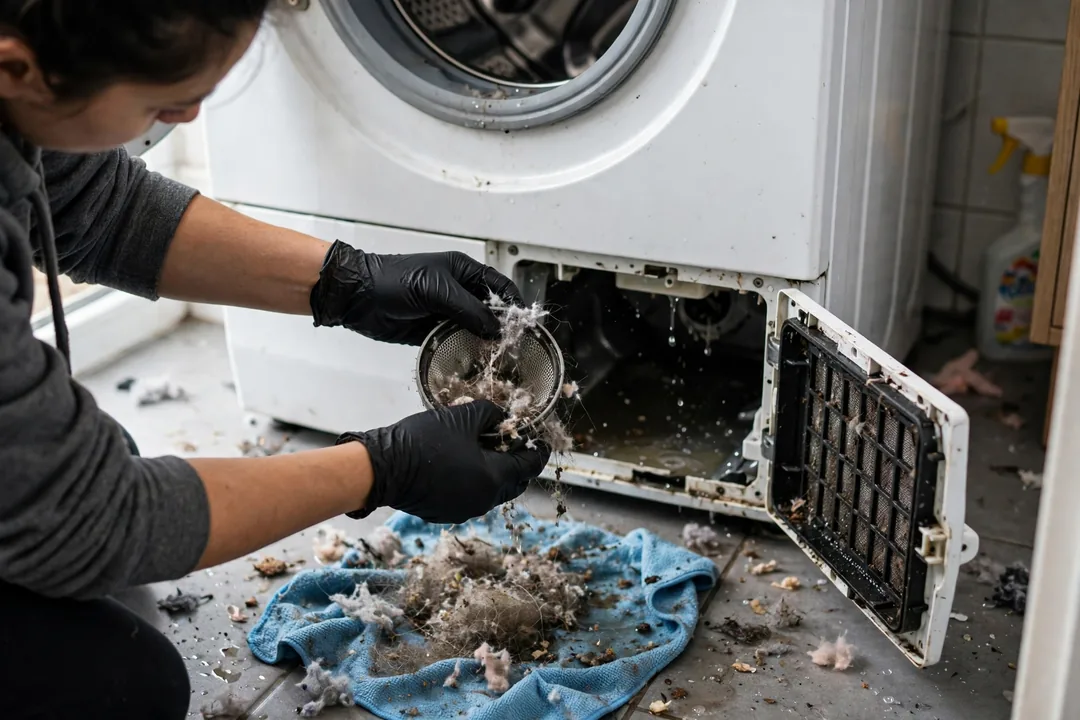
The pump filter traps the worst gunk. Coins, lint, hair, and sludge sit here for months. This is prime bacteria real estate. Cleaning it by hand removes what the flush cannot.
Find the filter access door on the front of the washer, near the bottom. Place a shallow pan and towels under it. Water will spill when you open it. Unscrew the filter slowly.
Pull out the filter and rinse it under hot water. Scrub off slime with an old toothbrush. Reach into the filter housing and wipe it out. You will likely find smelly sludge. That sludge was feeding the bacteria.
Screw the filter back in snugly. Run a short rinse cycle to check for leaks around the filter. A loose filter drips on the floor.
If your washer drains slowly too, the filter may be clogged enough to block water flow. Our guide to a clogged washing machine drain covers the full drain path from filter to standpipe.
Wipe the Door Seal and Dispenser
Pull back the rubber door seal on front-loaders. Look in the folds. You will often find gray slime. That slime smells. Wipe every fold with a vinegar-soaked cloth. Dry the folds with a towel after.
Pull out the detergent dispenser drawer. Rinse it under hot water. Scrub the drawer cavity too. Dried detergent in the drawer feeds bacteria and blocks water flow.
Top-loaders: wipe under the lid and around the bleach dispenser. These spots stay damp and grow the same bacteria.
If you see black mold along with the smell, read our front-load washer mold and odor guide. Mold needs a different cleaning approach than sulfur bacteria. You may need to treat both.
Keep the Smell From Coming Back
Leave the door or lid open between washes. Airflow dries the drum and kills the damp environment bacteria need. This single habit prevents most washer smells. Crack it open even a few inches.
Run a hot cleaning cycle once a month. Use vinegar or a washer cleaner. Mark it on your calendar. Monthly cleaning stops colonies before they stink.
Switch to high-efficiency detergent and use less of it. Excess soap leaves the scum bacteria eat. Two tablespoons is enough for most loads. Skip liquid fabric softener or switch to dryer sheets. Softener film feeds bacteria.
Wash in warm or hot water when the fabric allows. Towels and sheets handle hot water fine. A weekly hot wash keeps the bacterial population down.
When the Smell Means a Bigger Problem
A washer that smells and also fails to drain has a clogged pump or hose. Standing dirty water breeds bacteria fast. Fix the drain fault first, then clean. Our guide to a washer that will not drain or spin walks through the pump and lid-switch checks.
If the smell persists after two deep cleans and a filter cleanout, the outer tub may need professional cleaning. Some buildup sits where homeowners cannot reach. A technician can pull the inner drum and scrub the outer tub directly.
When to Call a Professional
Call a technician when cleaning does not fix the smell. Persistent odor after proper cleaning can mean a failing drain pump or a cracked outer tub holding water. These need parts and tools most homeowners do not have.
Also call if the smell comes with error codes, drainage failure, or leaks. Multiple symptoms point to a real fault, not just bacteria. Our washer repair hub covers every common washer problem.
Reach us at +1 (888) 206-0056 for washer help in any of our service locations. We will find the source of the smell and fix it right.
Frequently Asked Questions
Why does my washing machine smell like rotten eggs?
Sulfur bacteria cause the rotten-egg smell. They grow in the drain hose, the pump filter, and the outer tub where water sits. The bacteria release hydrogen sulfide gas, which smells like eggs. A hot-water flush with cleaner kills them. Regular cleaning stops them from coming back.
How do I get the egg smell out of my washer?
Run the hottest, longest cycle with two cups of white vinegar or a washing machine cleaner. Then clean the pump filter by hand and wipe the door seal. Leave the door open between washes so the drum dries. Repeat monthly until the smell stays gone.
Is it my washer or my water that smells like eggs?
Test the water alone. Fill a glass from the cold tap farthest from the washer and smell it away from the sink. If the glass smells like eggs, your home water is the source, often well water. If only the washer smells, the bacteria live in the machine. Treat the right source.
Can mold in the washer smell like eggs?
Mold smells musty, not like eggs. The egg smell comes from sulfur bacteria, a different organism. Both grow in damp washers, so you can have both at once. If you see black slime on the door seal, our front-load washer mold and odor guide covers mold removal in detail.
Will the egg smell transfer to my clothes?
It can. Bacteria in the washer redeposit onto laundry, especially in cold washes. If clean clothes smell faintly of eggs, the washer needs a deep clean. Wash the smelly load again in hot water after you clean the machine. The smell washes out of fabric easily.
How often should I clean my washer to prevent smells?
Run a hot cleaning cycle once a month. Wipe the door seal weekly on front-loaders. Clean the pump filter every two to three months. Leave the door or lid open between washes. These four habits stop sulfur bacteria and mold before they start.
Broken appliance? We're one call away.
Same-day appliance repair across 40 cities. Upfront pricing, written warranty, and an honest repair-or-replace answer on every job.
Call +1 (888) 206-0056