Why Is My Ice Maker Not Making Ice?
Why is my ice maker not making ice? Walk through the real causes, from freezer temp and a clogged water filter to a failed inlet valve, step by step.
Need appliance repair? Call now for same-day service.
Call +1 (888) 206-0056No ice for the drinks. The bin is empty and the ice maker is silent. When you ask why is my ice maker not making ice, the answer is almost always one of a short list of causes. Ice makers are simple machines. They need three things: a cold enough freezer, water reaching the tray, and a working cycle mechanism. When one of the three breaks down, the bin stays empty. This guide walks through the checks in order, from the 30 second fixes to the parts that need a technician.
Why Is My Ice Maker Not Making Ice? The Quick Checks
Start here. These take minutes and solve a large share of dead ice maker calls.
- Make sure the ice maker is turned on. Many models have an on off switch, a wire arm that must be down, or a setting in the fridge display. A wire arm bumped up by bags of frozen food stops production.
- Check the freezer temperature. The ice maker needs 0 degrees Fahrenheit or colder. Food stays frozen at 10 degrees, but the ice maker will not cycle there.
- Look in the ice bin. A single jammed cube can wedge the ejector arm and stop the whole cycle. Dump the bin, clear any stuck cubes, and put the bin back.
- Check the water supply valve behind the fridge. Make sure it is fully open and the line is not kinked behind the fridge.
If none of those fix it, work through the sections below.
The Freezer Must Be Cold Enough
This is the cause people miss most. The freezer feels cold. The ice cream is solid. But the ice maker needs the freezer at 0 degrees Fahrenheit or below to run its cycle. Between 5 and 10 degrees, many ice makers slow to a crawl or stop completely.
Put a thermometer in the freezer and wait a few hours. Do not trust the display setting alone. If the real temperature is above 0 degrees, turn the freezer setting colder and give the ice maker a full 24 hours to recover. Also check that the freezer vents are not blocked by food. Blocked vents create warm spots that stall the ice maker while the rest of the freezer seems fine. If the freezer cannot hold 0 degrees at all, you have a cooling problem, not an ice maker problem. Our fridge not cooling guide covers that side.
The Ice Maker Might Be Turned Off or Jammed
Ice makers stop for silly reasons. The wire shutoff arm gets bumped up when someone digs out frozen food. The on off switch gets flipped during cleaning. A cube wedges sideways in the tray and jams the ejector fingers. Ice clumps into a solid mass in the bin during a humid week and the auger cannot turn.
Pull the bin out and dump it. Look into the ice maker for stuck cubes or a tray that looks twisted. Push the wire arm down if it is up. Press the reset or test button if your model has one, usually a small button on the side or bottom of the ice maker unit. You should hear the tray rotate or see it cycle. If it cycles and then starts making ice, a jam was the whole problem.
Water Supply Problems
The ice maker cannot make ice without water. Trace the water path from your house plumbing to the tray.
The Water Valve Is Closed or Clogged
Find the shutoff valve for the fridge water line, usually behind the fridge or under the sink. Turn it fully open. Some homes have a small saddle valve clamped onto a copper pipe. These valves clog with mineral buildup over time and restrict flow to a trickle. If the valve is old and crusty, replacing it with a proper shutoff valve restores full flow.
The Water Line Is Kinked or Frozen
Pull the fridge forward and look at the water line. A sharp kink starves the ice maker. Straighten gentle kinks or replace a badly kinked line. In cold spots, the line itself can freeze where it runs through an unheated wall or crawl space. A frozen line needs thawing and then insulation or rerouting.
The Water Filter Is Old
A clogged water filter is one of the most common slow ice killers. Filters should be changed about every six months. An old filter chokes water flow, so the tray fills slowly or not at all. If your ice slowed down gradually over weeks, the filter is a strong suspect. Replace it with the correct filter for your model. After changing it, run a few gallons through the dispenser to clear air from the line.
A Frozen Fill Tube
The fill tube carries water from the back of the fridge into the ice maker tray. It can freeze shut, especially after a period of low water pressure. When it freezes, water backs up and can even drip into the freezer and form an ice sheet under the ice maker.
You can sometimes see the tube from inside the freezer at the back of the ice maker. If it looks iced over, unplug the fridge and thaw it with a hair dryer on low heat, keeping the dryer moving so you do not overheat any plastic. If the tube keeps freezing, low water pressure or a leaking inlet valve is the deeper cause.
The Water Inlet Valve Can Fail
The water inlet valve sits at the back bottom of the fridge where the water line connects. It opens on signal from the ice maker to fill the tray. Valves fail electrically or clog with sediment. Signs of a bad valve include a humming sound with no water, a tray that never fills, or a valve that leaks and keeps the fill tube frozen.
Testing a valve needs a multimeter and comfort working around water and wiring. Most homeowners call a technician at this stage. Valve replacement is a standard single visit job.
When the Ice Maker Module Itself Is Bad
If the freezer is at 0 degrees, water reaches the tray, and the tray fills but never cycles, the ice maker module has likely failed. The module includes the motor, the ejector, and the thermostat that triggers the harvest cycle. Modules wear out after years of cycles. Replacement means swapping the whole ice maker unit, which is a common repair with parts readily available for most brands.
Samsung Owners: Read This First
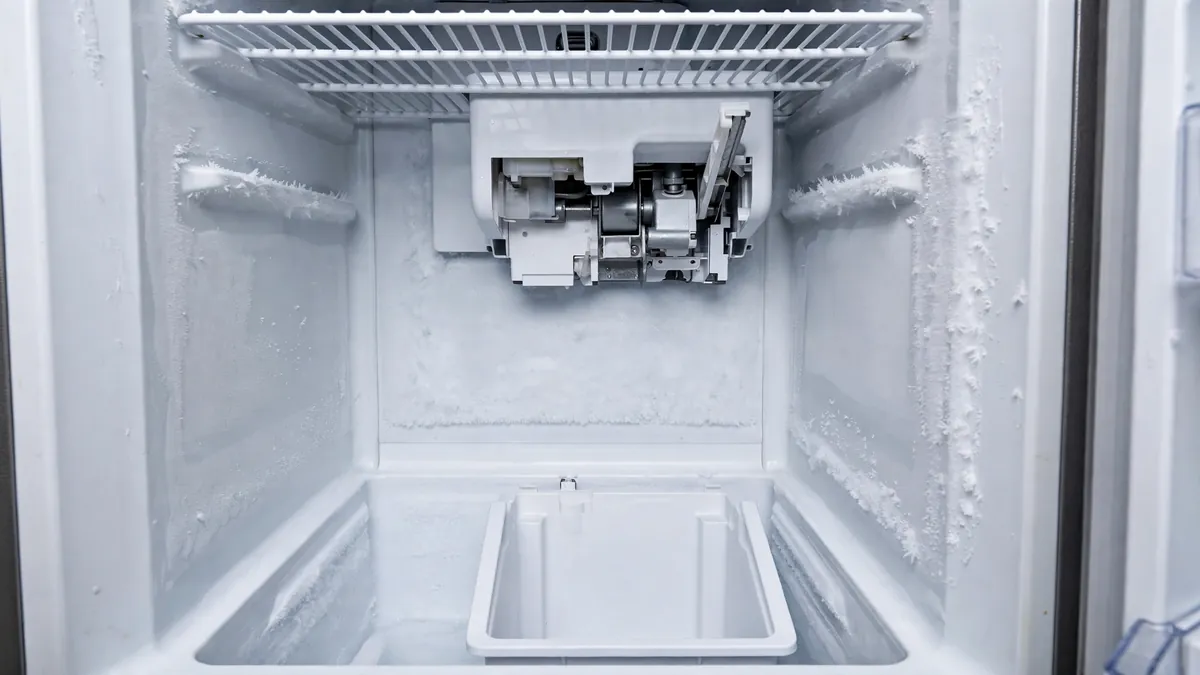
Samsung French door refrigerators have a well known ice maker weakness. Warm air leaks into the ice maker compartment in the fresh food section. Moisture condenses, frost builds up, and the frost jams the auger or blocks the ice chute. The ice maker stops, and the compartment fills with a slab of ice.
If you own a Samsung and the ice maker keeps failing, the fix usually goes beyond the steps above. It often takes a new ice maker assembly plus a sealing kit to stop the air leak. Our Samsung refrigerator repair guide covers this failure in full, including what the repair involves and what it costs.
How to Reset an Ice Maker
A reset clears electronic glitches and restarts the harvest cycle. Find the reset button on the side or bottom of the ice maker. Press and hold it for about 10 seconds until you hear a chime or see the tray begin to rotate. On models with no button, unplug the fridge for five minutes. After any reset, give the ice maker 24 hours. It needs time to chill the tray and run full cycles before the bin fills.
Still No Ice After Every Check?
Freezer at 0 degrees, water flowing, filter fresh, and the bin still empty. That points to a failed inlet valve or a dead ice maker module. Book ice maker repair and a technician will test the valve and the module in one visit. Call +1 (888) 206-0056 for same day and next day slots. We serve Milwaukee, Sacramento, and Grand Rapids. Pick your city in areas we serve to see local scheduling.
Frequently asked questions
Why is my ice maker not making ice?
The most common causes are a freezer that is not cold enough, a jammed ice maker arm, a closed or clogged water supply valve, an old water filter, or a frozen fill tube. Work through them in that order. If all of those check out, the water inlet valve or the ice maker module itself may have failed.
What freezer temperature does an ice maker need?
An ice maker needs the freezer at 0 degrees Fahrenheit or colder to make ice on a normal schedule. At 5 to 10 degrees the ice maker slows down or stops, even though frozen food still feels solid. Set the freezer to 0 degrees and give the ice maker 24 hours to recover.
How do I reset my ice maker?
Most ice makers have a small reset button on the side or bottom of the unit. Press and hold it for about 10 seconds until you hear a chime or see the tray move. On models with no button, unplug the fridge for five minutes to reset the ice maker control. Allow 24 hours for full ice production to resume.
How often should an ice maker make ice?
A healthy ice maker drops a batch of cubes every 90 minutes to 3 hours, which adds up to roughly 50 to 100 cubes per day depending on the model. If yours makes ice much slower than that, check the freezer temperature and the water filter first.
Why is my Samsung ice maker not making ice?
Samsung French door ice makers are prone to ice dams. Warm air leaks into the ice maker compartment, moisture turns to frost, and the frost jams the auger or blocks the chute. The full fix usually means a new ice maker assembly plus a sealing kit. See our Samsung refrigerator guide for the details.
Broken appliance? We're one call away.
Same-day appliance repair across 37 cities. Upfront pricing, written warranty, and an honest repair-or-replace answer on every job.
Call +1 (888) 206-0056