GE Refrigerator Ice Maker Repair
GE refrigerator ice maker repair: GE-specific checks for twist tray and door ice makers, filter and freezer temp fixes, and when to replace the unit.
Need appliance repair? Call now for same-day service.
Call +1 (888) 206-0056No ice for drinks is a small problem that feels big. GE refrigerator ice maker repair follows a short checklist. GE uses a few ice maker styles, but the checks are the same family. This guide covers GE specific parts and settings. For general ice maker trouble on any brand, start with our ice maker not making ice guide. If the fridge itself is not cooling right, read fridge not cooling freezer works first. A warm fridge breaks ice makers too.
Know Your GE Ice Maker Type
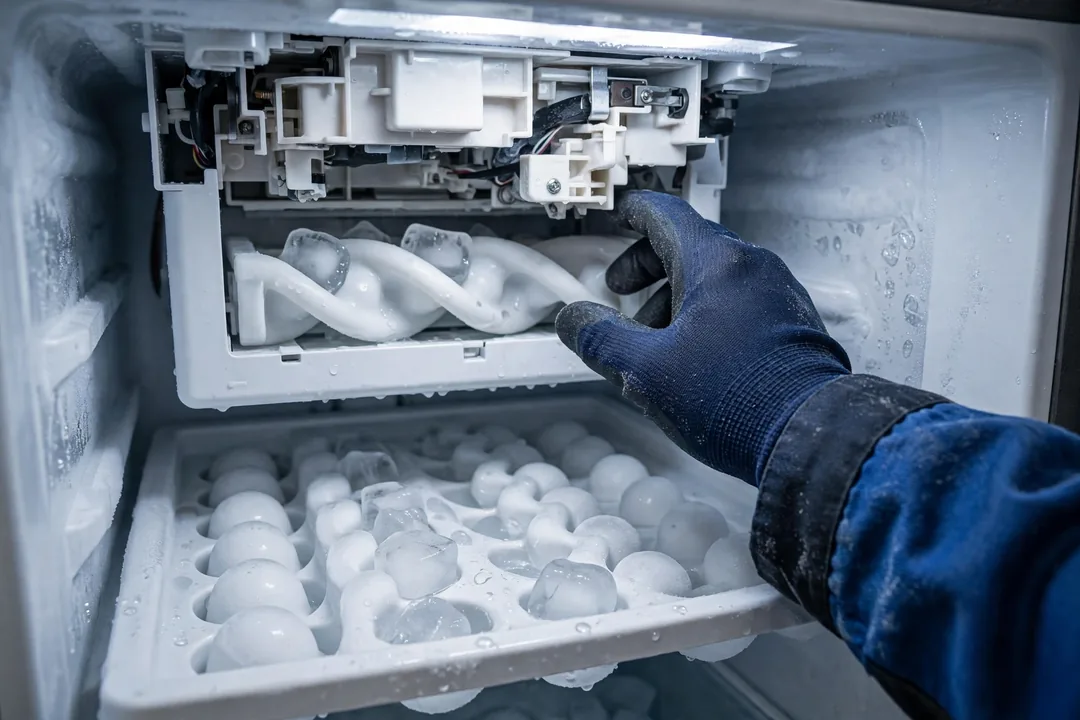
GE sells three common styles. Bottom freezer models often use a twist tray. The tray fills, freezes, then twists to drop cubes. French door models mount the ice maker in the left door or in the top of the fresh food section. Older side by side models use a compact cube maker in the freezer. The checks below work for all three. The switch and filter spots move around, but the logic stays the same.
Check 1: Freezer Temperature Must Be 0 Degrees
Ice makers need real cold. Set the freezer to 0 degrees Fahrenheit. A freezer at 10 degrees makes ice slowly or not at all. Give it 24 hours after any change. Opening the door often warms it back up. A thermometer on the middle shelf tells the truth. If the freezer will not hold 0 degrees, the ice maker is a symptom. Fix the cooling first.
Check 2: The On Off Switch and the Feeler Arm
GE ice makers have an on off switch. On twist tray models it sits on the side of the unit. On door models look near the ice bin for a switch or a green light. Cleaning day is the classic moment this gets bumped off. Next, look at the feeler arm. This thin wire arm rises as the bin fills. When it sits high, production stops. If it is stuck up, lower it gently. A bin that overflows with the arm down points to a bad arm switch.
Check 3: The Water Filter
GE fridges use twist in filters, often the RPWFE style. An old filter chokes water flow. Cubes come out small or hollow, then stop. Replace the filter every six months. After swapping it, run a few gallons through the water dispenser. This clears air from the line. Air locks can stall the ice maker for a day. If you use a bypass plug instead of a filter, make sure it seats fully. A loose bypass leaks pressure the same way a clogged filter does.
Check 4: Water Supply and the Fill Tube
Find the water shutoff behind the fridge or under the sink. Make sure it is fully open. A valve turned halfway starves the ice maker. Check the water line for kinks where the fridge meets the wall. GE models can freeze the fill tube. This is the small tube that drops water into the tray. If it is iced shut, no water reaches the tray. A careful thaw with a hair dryer on low works. Keep heat away from plastic parts. If it refreezes within weeks, the water valve may be leaking by.
Check 5: Run a Harvest Cycle
Many GE ice makers let you force a test harvest. On some models, hold the test button or cycle the feeler arm. The tray should fill, freeze, and twist within a few hours. If it fills but never twists, the motor module is suspect. If it twists but the tray stays dry, the water valve is suspect. Write down what you see. That detail saves the technician a return trip.
Not Filling vs Not Harvesting: Read the Clues
Watch one full cycle. It tells you which half is broken. If the tray stays dry, the fill side failed. That means the water valve, the filter, or the fill tube. If the tray fills and freezes but cubes never drop, the harvest side failed. That means the motor module or the mold heater. This split saves you from buying the wrong part. Tell the technician which half failed. It cuts the diagnosis time in half. Our refrigerator repair techs ask this question first on every ice maker call.
When the Whole Unit Needs Replacing
Ice maker units wear out. The motor, the heater that releases cubes, and the mold coating all age. If the unit is over eight to ten years old and tests fail, replacement beats repair. A new unit usually mounts with a few screws and one wiring harness. Unplug the fridge before you touch it. Match the part to your exact model number. A wrong unit will not fit the harness. If the water valve is the real fault, swapping the ice maker will not help. Confirm the diagnosis first.
Small or Hollow Cubes Mean Low Water Flow
Cubes that come out tiny or hollow point to weak water flow. The ice maker fills the tray, but not all the way. The usual cause is an old filter. Low house water pressure does the same thing. GE ice makers like steady pressure. If a recent plumbing job touched the supply line, check that the valve opened fully. Replace the filter first. It is the cheapest fix. If new filters do not help, the water inlet valve may be failing. It can stick half open. A tech can test it with a meter in minutes.
GE Refrigerator Ice Maker Repair Costs
A water filter costs little and you can swap it yourself. An ice maker unit is a mid range part. A water inlet valve sits in a similar range. Labor adds to both if a tech does the job. Get the total in writing before work starts. If the fridge is old and the sealed system is weak, weigh the repair against replacement. Our repair or replace guide walks through that math.
Still no ice after the checks? Call +1 (888) 206-0056 and tell us your GE model type and what the test harvest did. We will tell you whether it sounds like a filter, a valve, or a dead unit. See refrigerator repair for service details, or pick your city in areas we serve.
Frequently Asked Questions
Why did my GE ice maker suddenly stop making ice?
The top causes are a warm freezer, an old water filter, or the ice maker switch turned off. Check that the freezer reads 0 degrees, replace a filter older than six months, and confirm the on off switch is on. Most sudden stops trace back to one of these three.
Where is the on off switch on a GE ice maker?
On twist tray models it sits on the side of the ice maker inside the freezer. On door mounted models look for a small switch or a green LED near the ice bin. Some newer models use a control panel setting instead. If you recently cleaned the freezer, check this first.
How long does a GE ice maker take to make ice after a reset?
Give it a full 24 hours. The freezer must reach 0 degrees first, then the first harvest cycle runs, then cubes drop into the bin. Many owners call for service after six hours when the machine just needed more time. Check back the next day.
What does the feeler arm do on a GE ice maker?
The feeler arm, also called the bail arm, senses when the ice bin is full. As cubes pile up, they lift the arm and pause production. If the arm is stuck in the up position, the ice maker thinks the bin is full and makes nothing. Lower it gently by hand.
Can I replace a GE ice maker myself?
On many models yes. The unit usually mounts with a few screws and one wiring harness. Unplug the fridge first. If the water valve or the water line is the problem, that job is trickier. When in doubt, get a technician to confirm the diagnosis before buying parts.
Does a clogged water filter stop a GE ice maker?
Yes. GE ice makers need steady water pressure to fill the tray. A filter older than six months can choke the flow until cubes come out small, hollow, or not at all. Replace the filter, run a few gallons through the dispenser, and wait 24 hours.
Broken appliance? We're one call away.
Same-day appliance repair across 40 cities. Upfront pricing, written warranty, and an honest repair-or-replace answer on every job.
Call +1 (888) 206-0056