Fridge Door Gasket Replacement
Fridge door gasket replacement made simple: the dollar-bill seal test, how to order the right gasket, and step-by-step replacement tips that work.
Need appliance repair? Call now for same-day service.
Call +1 (888) 206-0056A loose fridge seal wastes energy every hour of every day. Cold air slips out. Warm air slips in. The compressor works overtime. Fridge door gasket replacement fixes all of that in under an hour. This guide shows how to test your seal, order the right part, and install it like a pro.
Fridge Door Gasket Replacement Starts With the Dollar-Bill Test
Open the fridge door and place a dollar bill halfway across the door frame. Close the door on it. Now pull the bill out slowly. A healthy gasket grips the bill with firm drag. A worn gasket lets it slide out with no resistance.
Test four spots: top, bottom, left, and right. Gaskets often fail on one side first. The hinge side and the bottom edge wear fastest. If the bill slides freely in any spot, that section of the seal is weak.
Repeat the test on the freezer door. Freezer gaskets fail too, and a weak freezer seal causes frost buildup. If both doors fail the test, plan to replace both gaskets.
This test takes two minutes and costs nothing. Do it once a year. Catching a weak seal early saves energy and protects the compressor from extra wear.
Clean First, Replace Second
A dirty gasket can fake a bad seal. Crumbs and sticky spills pack into the folds and hold the door open a crack. Before you order parts, clean the gasket well.
Mix warm water with a drop of dish soap. Wipe every fold with a soft cloth or an old toothbrush. Work around the full perimeter of the door. Rinse with a damp cloth and dry it fully.
Check the metal door frame too. Sticky residue on the frame breaks the seal just as badly. Wipe the frame clean and dry.
Now repeat the dollar-bill test. If the seal grips firmly everywhere, you just saved the cost of a gasket. If it still slides, the rubber itself is worn. Time to replace it.
How to Order the Right Gasket
Gaskets are model-specific. A gasket for one fridge will not fit another. Find your model number first. Our guide on where to find your refrigerator model number shows every common tag location.
Search the model number plus the word “gasket” on a parts site or call a parts supplier. Confirm the part matches your exact model. French-door fridges need two fresh-food gaskets. Side-by-sides need one per side. Order both fresh-food gaskets at once if both are aging.
Check the mounting style before you buy. Most modern gaskets press into a channel around the door. Older models screw on under a metal retainer. Some glue on. The product listing usually shows the style. Match it to your door.
Avoid universal gaskets. They rarely seal well. The correct factory part costs a bit more but fits right the first time.
Step-by-Step Gasket Replacement
Unplug the fridge or switch off its breaker. You will work around the door for a while. No power is needed.
Soak the new gasket in warm water for 15 minutes. This is the trick that makes the job easy. Warm water relaxes folds from shipping and makes the rubber flexible. Do not use boiling water. Warm tap water is enough.
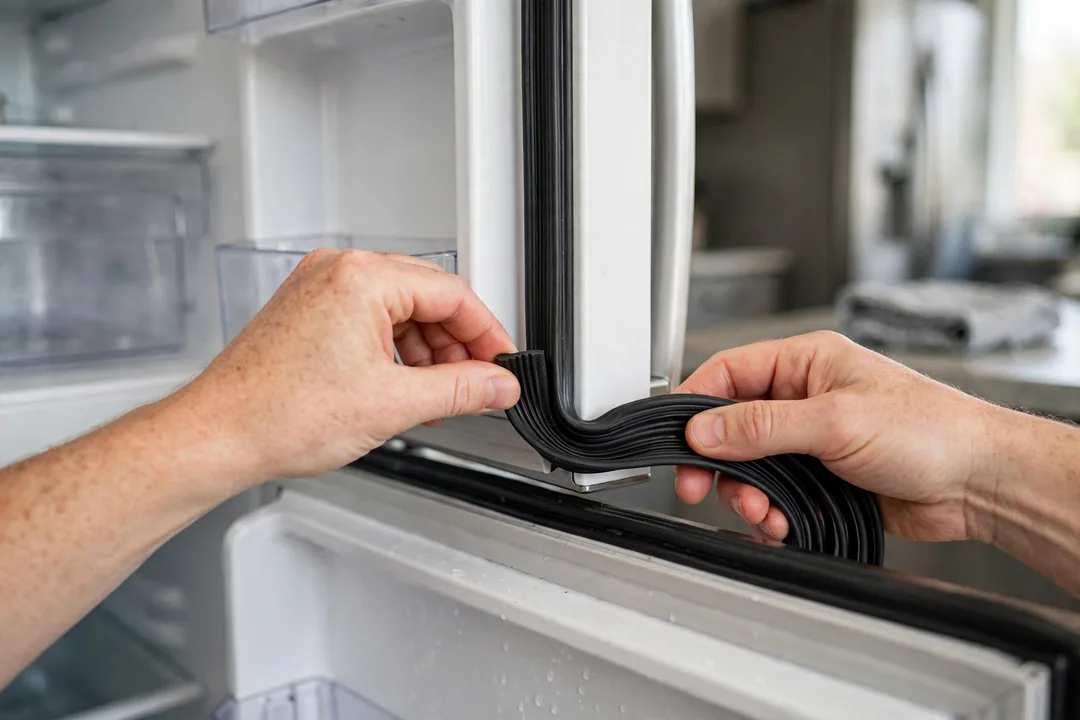
Start at one top corner of the old gasket. Peel it out of the channel with your fingers. Work around the door and pull the full gasket free. For screw-mounted gaskets, loosen the retainer screws and lift the strip.
Clean the empty channel with warm soapy water. Dry it fully. Dirt in the channel stops the new gasket from seating.
Press the new gasket into the channel, starting at the top corners. Work down both sides, then across the bottom. Push the lip firmly into the groove all the way around. For screw-mounted types, set the gasket under the retainer and tighten the screws snugly. Do not overtighten.
Close the door and check the seal. Look for gaps or twists. If one corner lifts, warm that spot with a hair dryer on low and press it flat. Let the door stay closed for a few hours. The magnet will pull the gasket into shape.
Run the dollar-bill test again. Every spot should grip firmly now.
When Replacement Points to a Bigger Problem
A gasket that keeps failing may signal another issue. A fridge that runs constantly can warp a new gasket with heat. If your fridge is not cooling while the freezer works, fix the cooling fault before replacing the gasket.
Water pooling under the fridge can also come from a bad seal. Warm air entering through the gap condenses and drips. Our guide to a refrigerator leaking water covers the other common causes. Rule out a clogged defrost drain before blaming the gasket alone.
Strange sounds can follow a weak seal too. The compressor runs longer and louder when cold air escapes. If your fridge is making noise along with cooling trouble, the gasket may be part of the story.
Maintenance That Extends Gasket Life
Wipe the gaskets every few months with warm soapy water. Clean folds stay flexible. Dry them after cleaning to stop mold.
Do not yank the door open by the gasket. Pull from the handle. Tugging the seal stretches it over time.
Keep heavy items off the door shelves. Overloaded doors sag on their hinges. A sagging door gaps at the top and crushes the gasket at the bottom. Check the door alignment once a year.
A thin coat of petroleum jelly on the gasket once a year keeps the rubber soft. Use a light touch. Too much attracts dust.
When to Call a Professional
Gasket replacement is DIY-friendly, but some jobs need a pro. If the door itself is warped or the hinges are bent, a new gasket will not seal. If the fridge has cooling faults beyond the seal, a technician should diagnose them. Our refrigerator repair hub covers the full range of fridge problems.
Call us at +1 (888) 206-0056 for refrigerator help in any of our service locations. We can replace gaskets, fix cooling faults, and tell you honestly when a repair is worth it.
Frequently Asked Questions
How do I know if my fridge door gasket needs replacing?
Do the dollar-bill test: close the door on a bill and pull it out. If it slides out with no drag, the seal is weak. Visible cracks, tears, or mold that will not scrub off also mean replacement time. A gasket that stays dirty or warped after cleaning will not seal again.
Can I replace a refrigerator door gasket myself?
Yes, most gaskets are a DIY job. Many press into a channel or attach with screws under a retainer strip. You need the correct replacement gasket for your model, a screwdriver, and warm water to soften the new gasket. The job usually takes 30 to 60 minutes per door.
How much does a fridge door gasket cost?
Replacement gaskets typically cost between $50 and $150 depending on the brand and fridge style. French-door models often need two gaskets, which doubles the parts cost. A professional installation usually adds $100 to $200 in labor if you prefer not to do it yourself.
Why is my new gasket not sealing flat?
New gaskets often arrive folded or twisted from shipping. Soak the gasket in warm water for 15 minutes before installing it. This relaxes the folds. After installation, close the door and let it sit for a few hours. The magnetic strip will pull the gasket flat against the frame.
Should I clean or replace a moldy door gasket?
Clean it first. Scrub the folds with warm soapy water and a soft brush, then dry it fully. If the mold stains remain but the rubber is still flexible and seals well, the gasket can stay. Replace it when the rubber is torn, brittle, or permanently warped, since no cleaning restores the seal.
Will a bad door gasket make my fridge run constantly?
Yes. A weak seal lets cold air leak out and warm air leak in. The compressor runs longer to hold the set temperature. You may also see frost buildup in the freezer or condensation on the door frame. Replacing a bad gasket often cuts run time noticeably.
Broken appliance? We're one call away.
Same-day appliance repair across 40 cities. Upfront pricing, written warranty, and an honest repair-or-replace answer on every job.
Call +1 (888) 206-0056