Dishwasher Not Cleaning Dishes
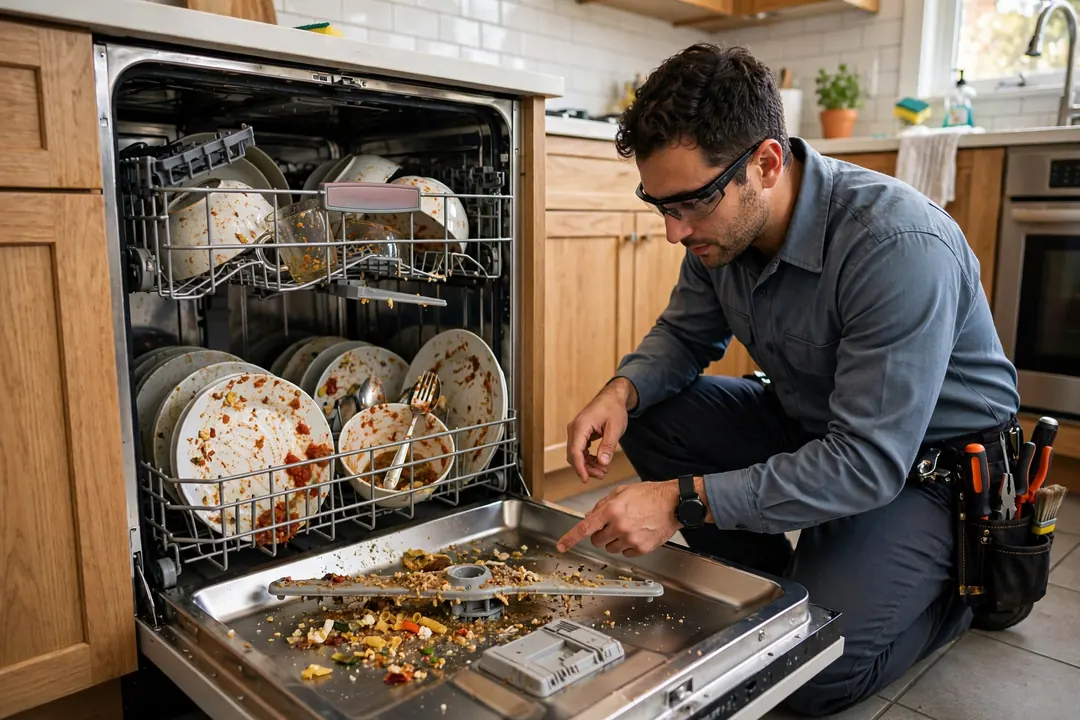
Dishwasher not cleaning dishes? A clogged filter, blocked spray arms, or cool water is usually the cause. Follow these fixes in order for clean dishes.
Need appliance repair? Call now for same-day service.
Call +1 (888) 206-0056Dirty dishes after a full cycle are frustrating. A dishwasher not cleaning dishes is one of the most common complaints. The cause is almost always simple. It comes down to water flow, water heat, or detergent. Work through the checks below in order. Most people find the problem in the first three steps.
Dishwasher Not Cleaning Dishes: Start With the Filter
The filter catches food scraps so they do not clog the pump. When it gets packed with gunk, water cannot flow well. Weak flow means weak cleaning. This is the number one cause of dirty dishes.
Find the filter at the bottom of the tub. Twist it out. Rinse it under hot water. Scrub it with a soft brush and dish soap. Look inside the filter housing too. Scoop out any trapped food. Put the filter back and lock it in place. Clean it once a month to prevent the problem from coming back.
If water also pools at the bottom, the drain may be part of the trouble. See our dishwasher not draining guide for drain checks.
Check the Spray Arms
Spray arms spin and blast water at your dishes. Tiny holes along each arm can clog with food or mineral scale. A clogged arm sprays weakly or not at all. Dishes in its path come out dirty.
Pull out the racks to reach both arms. Spin each arm by hand. It should turn freely. Look at every hole. Poke out clogs with a toothpick. Rinse the arm under the tap. On many models the arms lift off for a deeper clean.
Watch for blocked arms too. A tall pot or a flipped bowl can stop an arm from spinning. Load so nothing touches the arms. Run the arms by hand after loading to be sure they clear.
Water Temperature Matters More Than You Think
Dishwasher detergent needs hot water to work. The target is about 120 degrees at the dishwasher. Cooler water leaves grease and film behind. Many homes have the water heater set too low.
Test it simply. Run the kitchen hot tap into a glass. Use a kitchen thermometer. If it reads well below 120, turn up the water heater. Do not go above 120 for safety, especially with kids in the house.
Also run the hot tap before starting the dishwasher. Pipes hold cold water between uses. The first fill can be lukewarm if you skip this. Hot water from the start gives every cycle a head start.
Detergent and Rinse Aid
Old detergent cleans poorly. Powder and pods absorb moisture over time. A box that has sat open for a year has lost strength. Buy fresh detergent and store it sealed.
Use the right amount. Too little leaves food behind. Too much leaves a filmy residue. Follow the lines in the dispenser. Soft water needs less detergent than hard water.
Rinse aid is not optional for good results. It helps water slide off dishes. That cuts spots and speeds drying. Fill the dispenser and set it to release each cycle. If your model has a rinse aid dial, start in the middle and adjust.
Hard Water Leaves Its Mark
Hard water is full of minerals. Those minerals dry into white spots and cloudy film. Glasses look the worst. The dishwasher is not broken. The water is the problem.
Rinse aid helps with mild hardness. For heavy scale, run an empty cycle with a dishwasher cleaner. These cleaners dissolve mineral buildup inside the machine. Do this monthly in hard water areas.
Check your area’s water hardness online. Very hard water may need a softener for a real fix. Until then, rinse aid plus regular cleaning keeps dishes looking decent.
Loading Mistakes That Ruin Cleaning
How you load matters as much as the machine. Water must reach every surface. Nesting bowls block each other. Plates packed tight block the spray. Silverware clumped together stays dirty in the middle.
Face bowls and cups downward. Angle them so water runs off. Space plates so spray gets between them. Mix spoons and forks up and down in the basket. Keep tall items away from the spray arms.
Do not pre-rinse everything clean. Modern detergent needs some food to work against. Scrape off chunks, but leave light soil. A fully pre-washed load can actually come out worse.
The Circulation Pump: When Parts Fail
If you have done all the above and dishes still come out dirty, the circulation pump may be weak. This pump pushes water through the spray arms. A failing pump moves less water. Cleaning gets worse over weeks.
Signs of pump trouble include weak spray, new humming or grinding sounds, and cycles that seem to struggle. The pump is a sealed part. It needs a tech to test and replace.
A failed heater causes similar symptoms. The dishwasher fills and sprays, but the water never gets hot enough. Greasy film stays on everything. Both parts need professional tools to confirm. A dishwasher repair tech can test them in one visit.
Error Codes Can Point to the Cause
Some dishwashers flash an error code when cleaning fails. The code narrows the search fast. Check your manual or the display for a code. Our Bosch dishwasher error codes guide covers the most common brand. Match the code before buying any parts.
Deep Clean Routine That Prevents Most Problems
Once a month, give the dishwasher a full clean. It takes ten minutes. Remove and wash the filter. Wipe the door gasket. Clear the spray arm holes. Run an empty hot cycle with a cup of white vinegar on the top rack. This routine prevents most cleaning complaints. Our how to clean a dishwasher guide walks through each step in detail.
A dishwasher that does not clean is usually asking for maintenance, not a new machine. Clean the filter. Clear the arms. Check the water heat. Fix the loading. Most dirty-dish problems end there. If the racks still come out grimy after all this, the pump or heater may need a pro. Pick your city in areas we serve for local help. Or start with dishwasher repair to see your options. For a quick answer, call +1 (888) 206-0056. Describe what the dishes look like. The pattern tells a tech a lot.
Frequently Asked Questions
Why is my dishwasher not cleaning dishes anymore?
The filter is the first thing to check. A clogged filter starves the spray arms of water pressure. Next, look at the spray arms themselves. Food can block the small holes. Cool water is another common cause. Your water heater should send 120-degree water to the dishwasher for the detergent to work.
Why are my dishes still dirty after the dishwasher runs?
Poor cleaning usually comes down to water, detergent, or loading. Check that the filter is clean and the spray arms spin freely. Use fresh detergent and rinse aid. Load dishes so water reaches every surface. Bowls should face down and nothing should block the spinning arms.
What water temperature does a dishwasher need?
A dishwasher needs water around 120 degrees Fahrenheit. Cooler water cannot dissolve detergent fully or cut grease. Run the hot tap at the sink before starting the dishwasher. This pulls hot water into the line so the first fill is already hot. Check your water heater setting if dishes stay greasy.
Should I use rinse aid in my dishwasher?
Yes, rinse aid helps a lot. It makes water sheet off dishes instead of beading up. That means fewer spots and faster drying. It also helps with hard water film. Keep the rinse aid dispenser filled. Most dishwashers let you adjust how much it releases per cycle.
Why are there white spots on my dishes?
White spots usually mean hard water. Minerals in the water leave a film as dishes dry. Rinse aid reduces the spotting. If spots persist, try a dishwasher cleaner made for hard water. Very hard water may need a whole-home softener for a full fix. Check that you are not overloading the racks too.
When should I call a repair tech for a dishwasher that won't clean?
Call a tech if you have cleaned the filter, cleared the spray arms, fixed the water temp, and dishes still come out dirty. A weak circulation pump or a failing heater are likely causes. Both need parts and tools. Also call if the dishwasher makes new grinding noises or leaks during the cycle.
Broken appliance? We're one call away.
Same-day appliance repair across 40 cities. Upfront pricing, written warranty, and an honest repair-or-replace answer on every job.
Call +1 (888) 206-0056