why does my fridge run constantly
Why does my fridge run constantly? Learn what is normal, how dirty coils, bad seals, and thermostat faults keep it running, and when to call a pro.
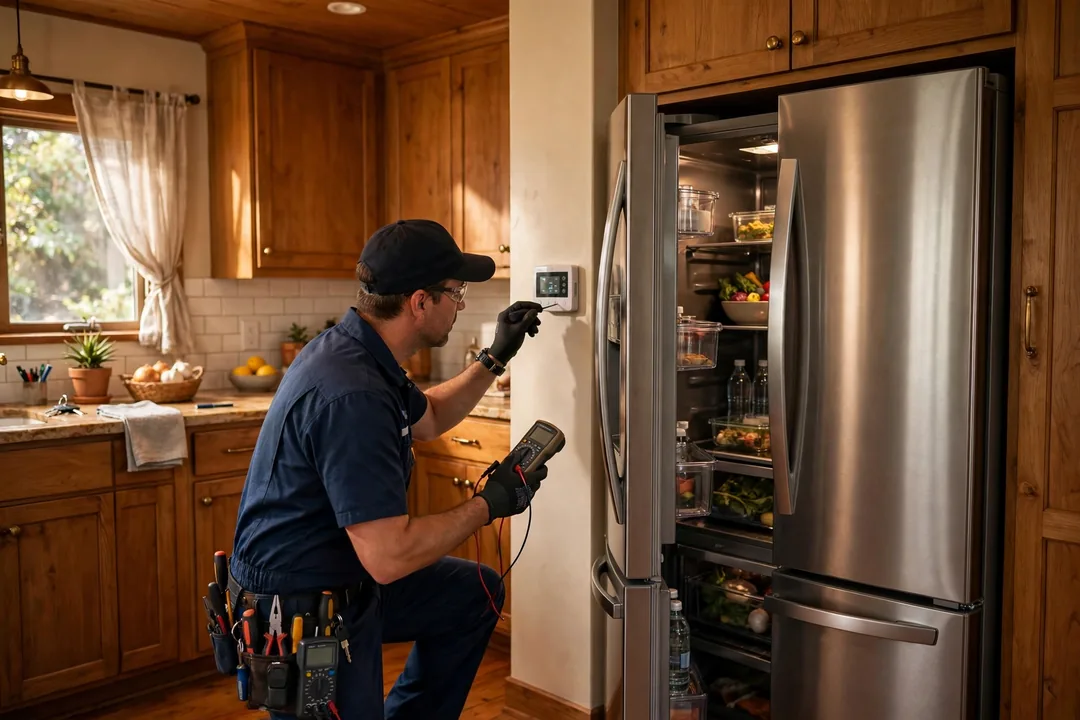
Need appliance repair? Call now for same-day service.
Call +1 (888) 206-0056Asking why does my fridge run constantly is smart. A fridge that never shuts off is crying for help. It is burning extra power, wearing out its compressor, and telling you something is wrong. The tricky part is that some constant running is normal. A fridge in a hot garage in July works hard. The key question is whether it ever cycles off.
This guide separates normal from not normal, then walks through every common cause in order.
The quick answer to why does my fridge run constantly
A fridge runs nonstop when it cannot reach or hold its target temperature. The usual reasons are dirty condenser coils, a weak door seal, or a failed thermostat. A hot room with poor ventilation makes it worse.
What counts as normal
Fridges do not run on a fixed schedule. Normal run time shifts with conditions:
- Hot kitchen or garage: longer runs are expected. Heat leaks in faster.
- After grocery shopping: a full load of warm food takes hours to cool.
- Frequent door opening: each opening dumps cold air and restarts cooling.
- New fridge: the first 24 hours run almost nonstop to reach temperature.
Normal means it still pauses sometimes. You should hear quiet stretches, especially at night. Nonstop running for days with no pauses is never normal. Trust your ears here. A fridge that sounds busy around the clock is telling you the truth.
Cause 1: Dirty condenser coils
This is the number one cause. Dust and pet hair blanket the coils. Heat cannot escape. The compressor runs longer and longer to do the same job. Eventually it barely cycles off at all. The fix is free and takes 20 minutes. Our coil cleaning guide walks you through it.
Cause 2: Bad door seals
A weak gasket leaks cold air all day. The fridge cools the kitchen instead of the food. Test every seal with the dollar bill trick. Close the door on a bill at several spots. If it slides out easily, that seal is leaking. Clean sticky seals with warm soapy water. Replace seals that are cracked or flattened. This is one of the cheapest repairs you can make.
Cause 3: Hot room and poor ventilation
Fridges hate hot, cramped spaces. A fridge in a 95 degree garage works twice as hard as one in a 70 degree kitchen. Tight clearance makes it worse. The fridge needs 1 to 2 inches of space behind it and room above for heat to rise away. Pull it out from the wall. Keep it out of direct sun. If the room itself is the problem, expect longer run times as the price.
Cause 4: Thermostat or sensor failure
The thermostat is the off switch. When it sticks, the compressor never gets the stop signal. Modern fridges use a thermistor instead, a small electronic sensor. When it misreads the temperature, the board keeps cooling. Clues pointing here include food freezing in the fridge section along with the constant running. See our fridge freezing everything guide for the full sensor diagnosis.
Cause 5: Defrost system failure
Frost on the evaporator coils insulates them. The system runs longer to push cold through the ice. Check the freezer back wall. Thick frost means the defrost heater, thermostat, or timer has failed. A 24 hour manual defrost restores normal cycling temporarily. The failed part still needs replacing. Our freezer not freezing guide covers defrost failure in detail.
Cause 6: Low refrigerant
A refrigerant leak slowly starves the system. Cooling capacity drops. The compressor runs endlessly but never quite gets there. This is less common than coils, seals, and sensors, so rule those out first. Signs pointing to refrigerant include a very hot compressor, hissing sounds, and coils that frost only partway. Only a licensed tech with gauges can confirm and repair this. Never attempt sealed system work yourself.
Cause 7: Blocked internal vents
Food packed against the freezer or fridge vents disrupts airflow. Cold air cannot circulate. Some areas stay warm, so the system keeps running. Keep food an inch clear of all vents, especially on the back walls. This also fixes uneven cooling and is free to try.
Cause 8: Failing compressor
A worn compressor loses pumping power. It runs longer to move the same heat. This is the last thing to suspect, because compressors usually fail suddenly rather than fading. But on a fridge past 12 years with constant running and weak cooling, the compressor may be wearing out. Our compressor cost guide helps you decide if repair is worth it.
The dollar cost of ignoring it
A fridge running twice as much as it should adds real money to your power bill. The extra strain also wears the compressor faster. Fixing dirty coils or a bad seal now costs little. Replacing a burned out compressor later costs a lot. Treat constant running as an early warning.
Quick diagnostic checklist
Work through this list in order. Each step rules out one cause. Stop when you find the fault.
- Clean the condenser coils.
- Test all door seals with a dollar bill.
- Check clearance behind and above the fridge.
- Clear food away from all vents.
- Verify temperatures with a thermometer.
- Look for thick frost on the freezer back wall.
- Listen for the compressor cycling off at night.
If you reach step 7 and it still never pauses, the problem is a sensor, defrost part, refrigerant, or compressor. Those need a pro. Our refrigerator repair techs test each cause in order. You only pay for the part that actually failed.
Fridge never cycles off?
You have ruled out the easy causes. Our techs diagnose constant running daily and find the real fault in one visit. Call +1 (888) 206-0056 to book. Home Appliance Repairs offers same day and next day refrigerator repair. We serve 40 cities across the US. Find yours on our locations page.
Frequently Asked Questions
Is it normal for a refrigerator to run all the time?
It is normal for a fridge to run most of the time in hot weather or right after a big grocery trip. It is not normal for it to run literally nonstop for days. A healthy fridge cycles off for stretches once it reaches temperature. If yours never pauses, something is forcing it to work too hard.
Why does my fridge run constantly but still cools fine?
The fridge is reaching temperature but struggling to stay there. Dirty condenser coils are the top cause. Heat cannot escape, so the compressor runs longer each cycle. A weak door seal leaking cold air does the same thing. Clean the coils and test the seals. Both are cheap fixes that often solve it.
Can a bad thermostat make a fridge run nonstop?
Yes. The thermostat tells the compressor when to stop. A stuck thermostat never sends the stop signal. A failed thermistor, the electronic sensor in modern fridges, causes the same symptom by misreading the temperature. If the fridge also freezes food, a sensor fault is very likely.
How long should a refrigerator run between cycles?
There is no single number, because room temperature, door openings, and food load all change the timing. In a 70 degree kitchen a healthy fridge might run 40 to 60 percent of the time. In a hot garage it can run 80 percent or more. Worry when it never shuts off at all.
Will a fridge that runs constantly break sooner?
Yes. Constant running wears the compressor faster and raises your power bill. It is also a symptom, which means some other part is already failing. Fixing the root cause early protects the compressor. A compressor that dies from years of overwork is the most expensive fridge repair there is.
Can low refrigerant make a fridge run all the time?
Yes. Low refrigerant means the system cannot move enough heat, so the compressor runs endlessly trying to catch up. But dirty coils, bad seals, and failed fans cause the same symptom and are far more common. Rule those out first. A tech with gauges can confirm low refrigerant in minutes.
Broken appliance? We're one call away.
Same-day appliance repair across 40 cities. Upfront pricing, written warranty, and an honest repair-or-replace answer on every job.
Call +1 (888) 206-0056