ge dryer repair
GE dryer repair guide for no heat problems, thermal fuse failures, and noisy drums. Hotpoint covered too, with typical costs and safety tips.
Need GE appliance repair? Call now for same-day service.
Call +1 (888) 206-0056Your GE dryer tumbles but the clothes stay damp. Or it screams every time it runs. GE dryer repair usually comes down to heat or noise. Both have clear causes and fair prices. This guide covers the heating element, the thermal fuse, and the parts behind the noise. It includes typical cost ranges, vent safety notes, and honest repair or replace advice. Hotpoint dryers are covered too, since they share GE parts.
GE dryer repair: heat and noise, the two big complaints
GE dryers are workhorses. They run for years with little trouble. When they do fail, the symptom is almost always heat or noise. Heat problems trace to airflow, the thermal fuse, or the heating element. Noise problems trace to worn drum supports. This guide walks through each cause in the order a tech would check them. Cheapest checks first. Owner surveys say about one in ten dryer complaints is clothes not drying.
No heat: start with airflow, not parts
When a dryer runs but will not heat, check airflow before buying parts. Pull the dryer out and look at the vent hose. A crushed hose chokes the hot air. Clean the lint screen. Then check the outside vent cap for lint buildup. Weak airflow makes the dryer overheat and kills parts. Many no heat calls end at the vent. If airflow is clear and heat is still missing, check two parts next. The thermal fuse and the heating element are the prime suspects.
The thermal fuse: a one time safety device
The thermal fuse is a small safety device inside the dryer. It blows once if the dryer overheats. A blown fuse cuts the heat circuit dead. The drum still tumbles, but no heat comes out. Fuses usually blow because of poor airflow, not old age. That means a new fuse will blow again if the vent stays clogged. Always find the cause before replacing the fuse. Thermal fuse replacement usually runs $100 to $200, including the vent check that should come with it.
The heating element: the usual suspect on electric models
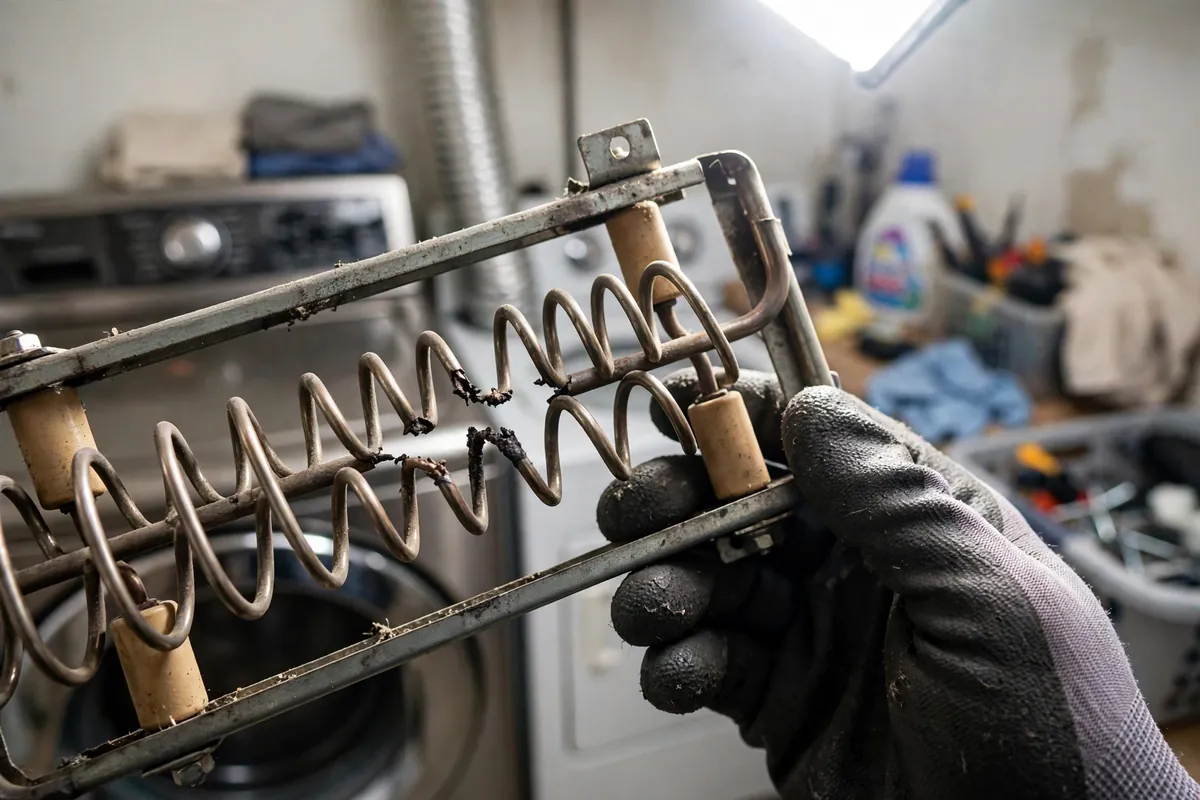
The heating element is a coiled wire that glows hot and warms the air. On electric GE dryers it is the part that makes heat. Elements break from age and from overheating. A broken element means a cold dryer that tumbles fine. Gas GE dryers use an igniter and gas valve coils instead of an element. Weak coils let the flame die mid cycle. Heating element replacement usually runs $150 to $300. Gas valve coil replacement runs about the same.
Squealing, thumping, and rumbling noises
GE dryers ride the drum on small supports. Drum glides are smooth plastic strips at the front of the drum. They wear thin and the drum starts to thump. Drum rollers sit at the back and can wear flat, which causes rumbling. The idler pulley keeps the belt tight. When its bearing dries out, it squeals loud enough to hear through walls. Many GE models use idler pulley part number WE12X83. A short spray of lubricant is not a fix. Worn supports need replacement. Glides and rollers usually run $150 to $280 for the set, installed. An idler pulley job usually runs $120 to $220.
Timer and control problems
Older GE dryers use a mechanical timer. It is the dial you turn to set the cycle. Timers can stick, skip, or refuse to advance. The dryer then runs forever or stops early. Newer models use an electronic control board. Boards fail less often but cost more. If the timer sticks on one cycle, try a different heat setting first. A timer that fails on every setting needs replacement. Timer replacement usually runs $200 to $350.
Vent safety: the lint fire risk
A clogged dryer vent is a fire risk, not just a nuisance. Lint builds up in the vent run over time. Heat plus lint plus restricted airflow is the recipe for a vent fire. Clean the vent path once a year. Use smooth metal duct, not the flimsy foil kind. Foil ducts crush and trap lint. Keep the outside cap clear of snow and nests. If clothes take two cycles to dry, treat it as a warning. A vent cleaning service usually runs $100 to $180.
Typical GE dryer repair service costs
These are typical costs from shops across the US. Your quote depends on the model and your market. Ask for a flat total before any work starts.
- Diagnostic visit: $60 to $130, often credited toward the repair
- Thermal fuse: $100 to $200
- Heating element, electric: $150 to $300
- Gas valve coils: $150 to $300
- Drum glides and rollers: $150 to $280
- Idler pulley: $120 to $220
- Timer or control: $200 to $350
- Vent cleaning: $100 to $180
Repair or replace: an honest answer
Use the 50 percent rule. If the repair tops half the price of a comparable new dryer, buy new. Most of these repairs fall well short of that. A fuse, element, or pulley job on a dryer under ten years old is easy money. Dryers are simple machines with long lives. The math turns on old gas models with multiple failures. If a twelve year old dryer needs a control board and a full roller set, price a new one. Count delivery and haul away in the new price. Hotpoint dryer repair follows the same math, since the parts are shared.
Get your GE dryer fixed today
A dryer that will not heat wastes energy and time. Note the symptom and whether yours is gas or electric. Then ask for a flat quote before any work starts. For same day service, call [BUSINESS PHONE: TBD]. Our dryer repair hub covers every brand. If your washer needs help too, see our Whirlpool washer guide and our Samsung washer guide.
Where we fix GE dryers
We fix GE and Hotpoint dryers across our service areas. See local pricing and same day options in Milwaukee, Sacramento, and Grand Rapids.
Frequently asked questions
Why is my GE dryer not heating?
Check airflow first. A crushed vent hose or clogged outside cap makes the dryer overheat and blow the thermal fuse. If the vent is clear, the heating element or fuse has likely failed. The drum will still tumble with no heat. Element replacement usually runs $150 to $300.
Why is my GE dryer making a loud squealing noise?
A dry idler pulley bearing is the classic cause. It squeals as the belt turns. Worn drum glides thump and worn rollers rumble. The noise tells you which part is worn. Pulley replacement usually runs $120 to $220. Glides and rollers run $150 to $280.
Why does my GE dryer keep blowing the thermal fuse?
The fuse blows from overheating, and the root cause is almost always restricted airflow. A clogged vent or crushed hose traps heat inside. Replacing the fuse without fixing the vent just blows the next one. Clean the full vent path, then replace the fuse.
Can a clogged dryer vent cause a fire?
Yes. Lint is flammable, and a clogged vent traps heat around it. Dryer vent fires are a known household risk. Clean the vent once a year and use smooth metal duct. If drying takes two cycles, treat it as a warning sign and get the vent checked.
Is it worth repairing a 12 year old GE dryer?
Often yes, if the fix is small. Dryers are simple and a fuse or element job costs a fraction of new. Use the 50 percent rule. If one repair tops half the price of a new dryer, replace it. Multiple failures on a very old unit point the same way.
How long does a GE dryer heating element last?
Many last 8 to 12 years. Poor airflow shortens that life fast, since overheating stresses the coil. Keep the vent clear and the lint screen clean. An element that fails twice in a year signals a vent problem, not bad luck.
Broken appliance? We're one call away.
Same-day appliance repair across 37 cities. Upfront pricing, written warranty, and an honest repair-or-replace answer on every job.
Call +1 (888) 206-0056